Discover how to style a gallery wall around a TV with my interior styling top tips.
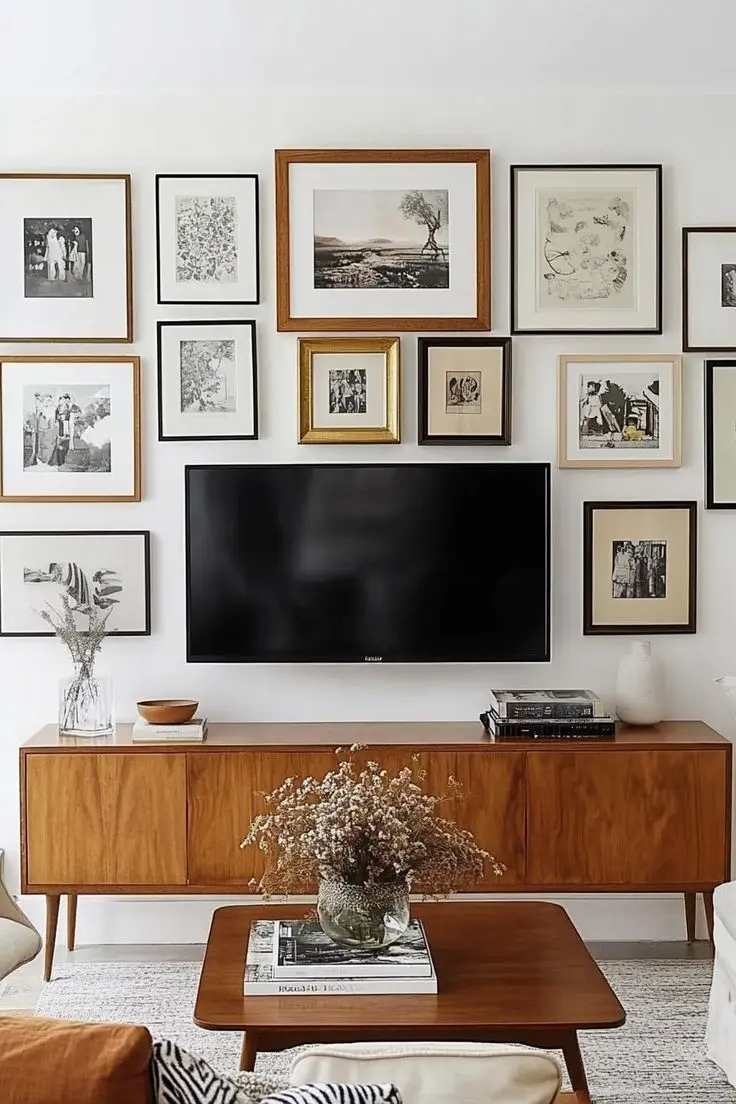
The black rectangle problem. If you have ever spent months pulling a living room together, nailed the colour palette, found the perfect sofa, styled the shelves just so, and then switched the TV off only to have a giant blank screen undo all of that hard work in an instant, you will know exactly what I mean.
As an interior stylist I have styled countless living rooms for clients, shoots and brands, and the TV question comes up every single time. Where does it go? How do you make it work with the rest of the wall? And more recently, is it worth investing in an Art TV?
I have worked with Art TVs on several client projects now and my honest answer is that they are one of the most genuinely useful pieces of technology to come into the interiors world in years. But only if you style them properly. Get it wrong and they still look like a TV trying too hard. Get it right and they disappear into the wall in the best possible way.
Here is everything I know about how to style a gallery wall around a TV, including the mistakes I see most often and exactly how to fix them.
MORE ABOUT MAXINE BRADY
Maxine Brady is an award winning interior stylist in Brighton. She has 25 years experience styling homes and interiors for magazines, brands and TV shows across London, the UK and internationally. Follow her on instagram 96K followers and Tiktok. Listen to Maxine’s Interiors Podcast: How to Home
First, why have Art TVs taken off?
It is worth understanding why these TVs exist before you decide if one is right for you. Open-plan living has completely changed how we think about screens. When your living room, dining area and kitchen are all one space, a large black rectangle on the wall affects the whole room, not just the sofa end. Nobody wants that to be the focal point when the TV is off.
There is also a broader shift happening around technology and wellbeing. More of my clients are actively telling me they want their homes to feel calm and considered, and a dominant screen works against that. An Art TV lets you display a piece of artwork, a photograph or a simple texture when it is not in use, so the room keeps its personality around the clock. That is a genuinely good idea and it is why I recommend them on the right projects.

Tip 1: Stop thinking of it as a TV
This is the single most important mindset shift and it changes everything about how you approach the wall. The moment you start treating your Art TV as just another frame in the gallery, the styling decisions become much easier and much more intuitive.
Choose a surround that ties in with your other frames. Most Art TVs now offer interchangeable bezels or clip-on surrounds in different finishes and colours, which means you can match it to a brushed brass frame, a natural wood frame or even a painted one. The TV should feel like it belongs to the wall, not like it has been allowed onto it.
Tip 2: Plan your layout on the floor before anything goes up
I do this on every single gallery wall I style professionally and it saves an enormous amount of time and unnecessary holes in the wall. Lay all your frames out on the floor including the TV measurements, move things around until the balance feels right, and then take a photo on your phone. That photo becomes your guide when you start hanging.
It sounds almost too simple but it is genuinely the most valuable step. You can see immediately if the TV is too dominant, if you need a larger piece on one side to balance it, or if the spacing feels off. Sort it on the floor and the wall will look effortless.
Tip 3: Place it off-centre
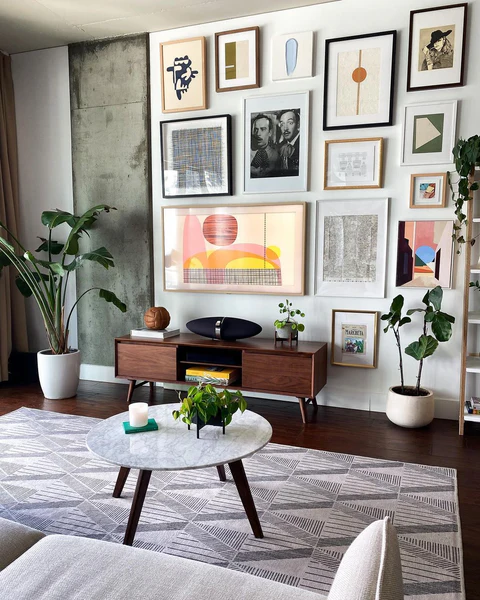
One of the most common mistakes I see is hanging the TV dead centre of the gallery wall. It immediately draws the eye and gives the game away. The whole point of an Art TV is that it blends in, and centring it does the opposite.
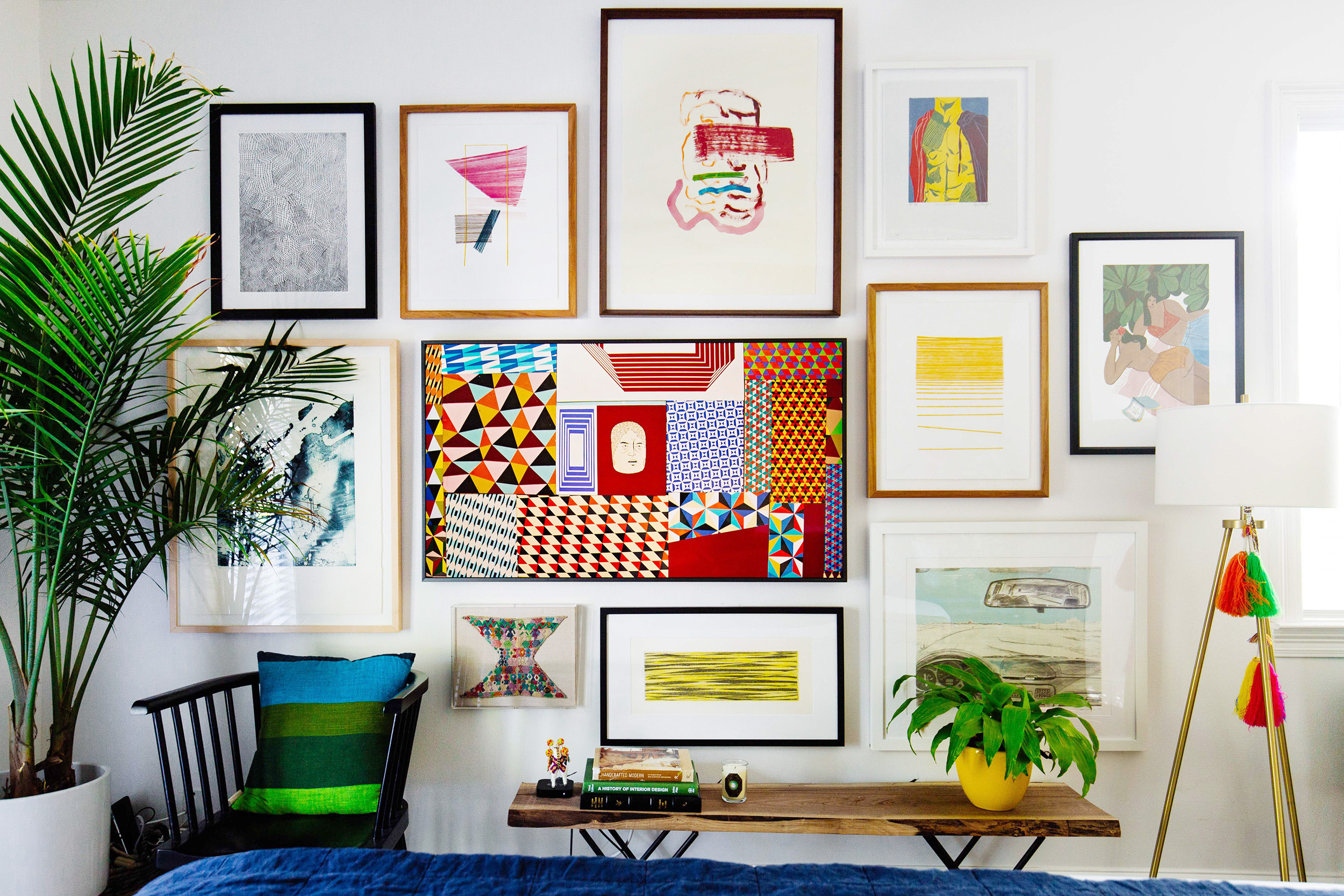
Instead, treat it as one element in an asymmetric arrangement. Position it slightly to one side and balance it with a cluster of smaller frames on the other. This is exactly how I approach gallery walls with a mix of large and small pieces, and the TV should follow the same logic. Off-centre, balanced by other things, given room to breathe without being the obvious focal point.
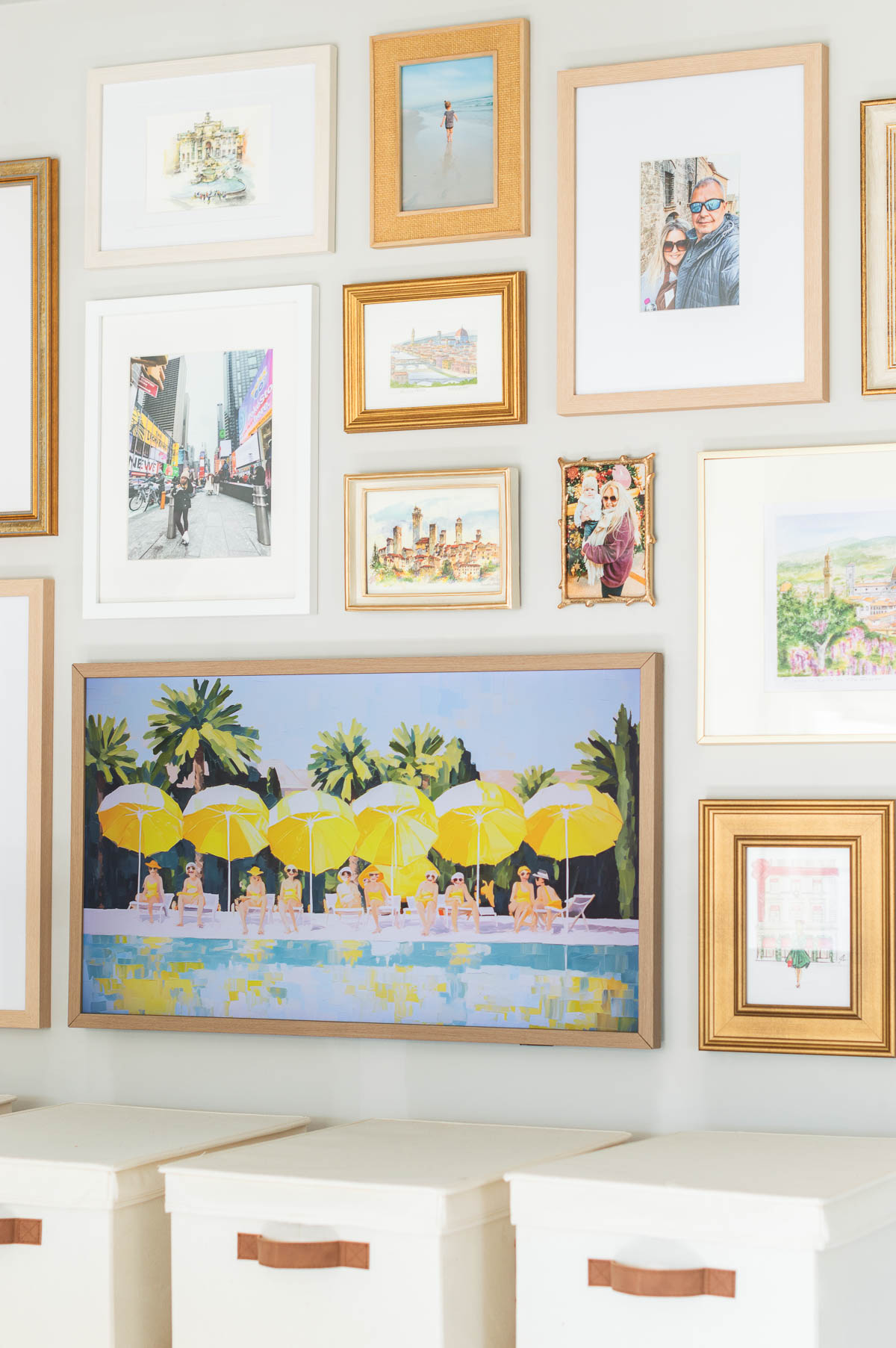
Tip 4: Mix your frame styles and sizes with confidence
Gallery walls that look flat and lifeless almost always have one thing in common: everything is too similar. Same frame finish, same size, same distance apart. It ends up looking like a grid rather than something that has been built up over time with personality.
The approach that works is to mix it up deliberately. Vary the frame sizes so there is contrast. Combine different finishes, and do not be afraid to bring in colour. Plain black, white and gold frames have dominated gallery walls for years but we are absolutely in a moment of bolder, braver framing choices now. Oliver Bonas has some brilliant options if you want to start experimenting with coloured or patterned frames. When the TV surround is just one finish among several, it sits much more naturally in the mix.
My Top 5 Art TVs Right Now
| TV | Size from | Price from | Where to buy |
|---|---|---|---|
| Samsung The Frame (2025) | 43 inch | From £899 | John Lewis / Samsung |
| Samsung The Frame Pro (2025) | 55 inch | From £1,799 | John Lewis / Samsung |
| Hisense CanvasTV | 55 inch | From £799 | Currys |
| TCL NXTVISION | 55 inch | From £679 | Argos |
| Amazon Fire TV Ember Artline | 55 inch | From £670 | Amazon |
Tip 5: Sort the cables before you do anything else
I cannot stress this enough. You can have the most beautifully styled gallery wall in the world and a single visible cable will undo all of it. The eye goes straight to it every time.
Before you hang anything, plan your cable management. In-wall cable tidies, cable covers that paint over, or furniture positioned to conceal the route from the TV to the socket. On client projects I always factor this in at the planning stage rather than as an afterthought, because retrofitting it is much harder. If the cables are sorted, the TV has a genuine chance of disappearing into the wall the way it is supposed to.
Tip 6: Build your gallery wall gradually and make it personal
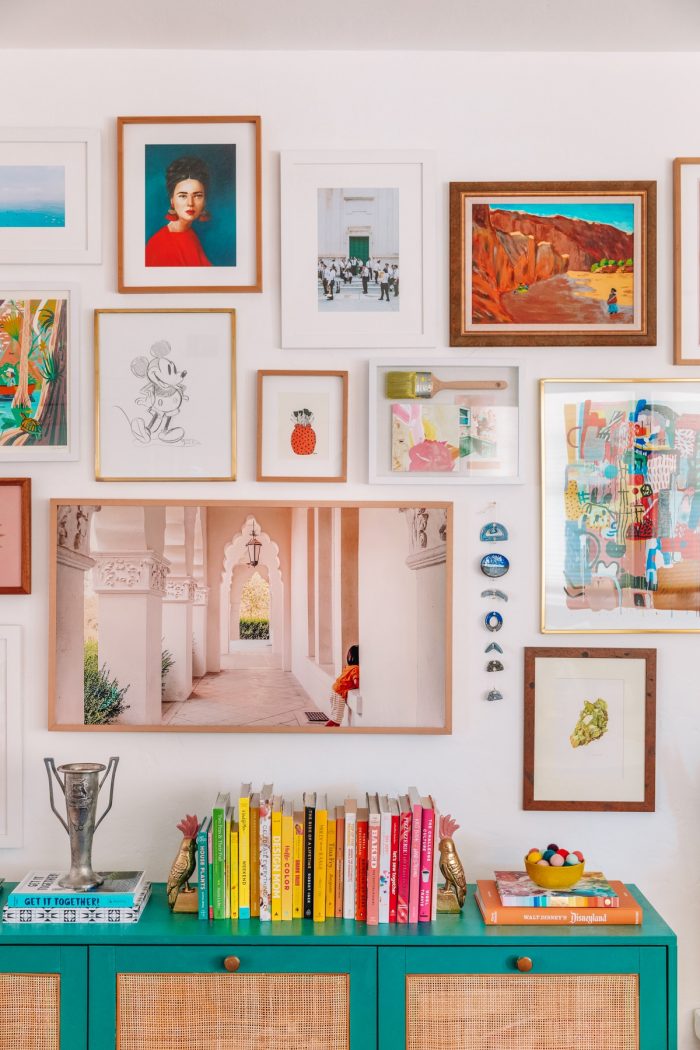
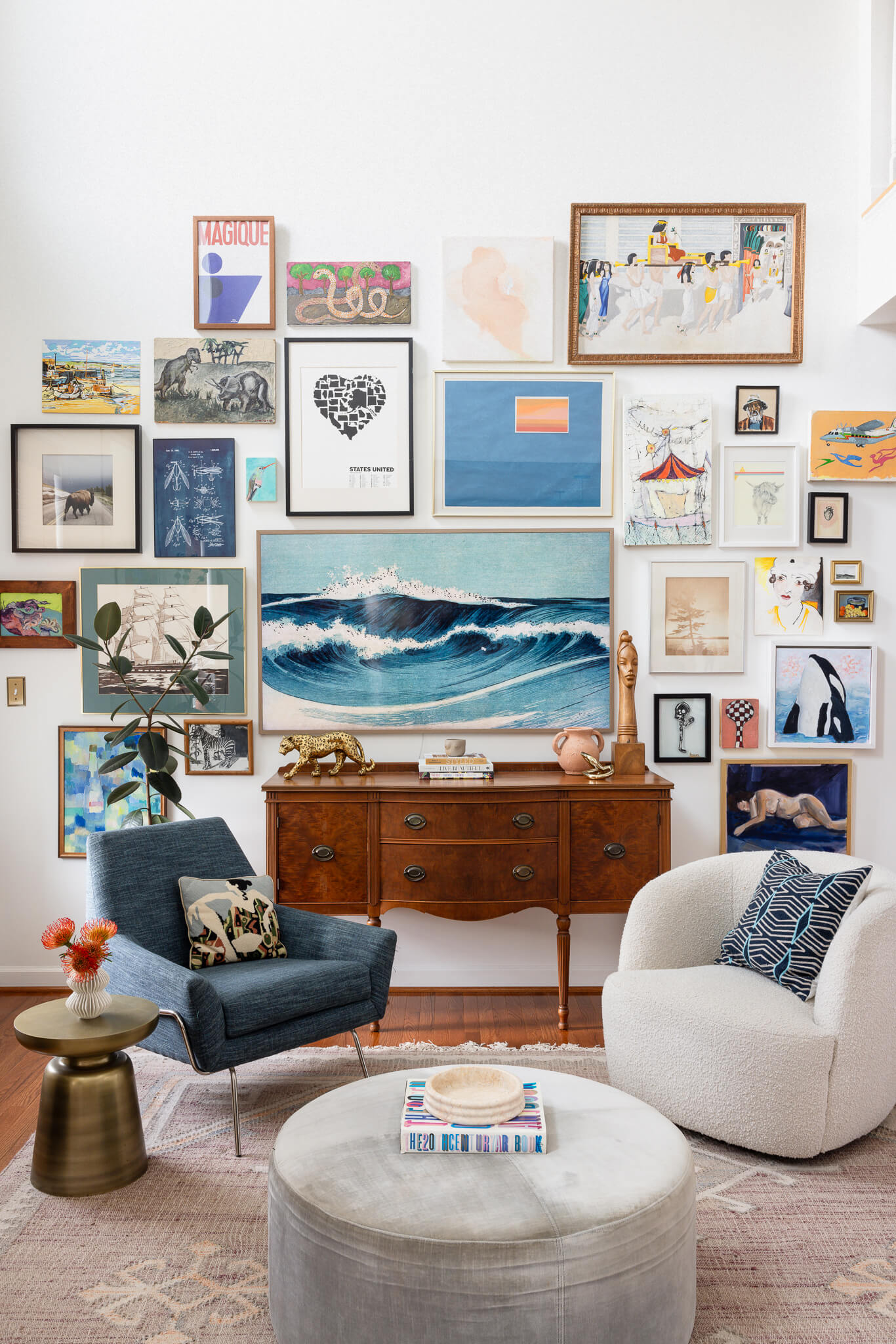
This is the shift I am seeing more and more in the homes I work in, and it is a really good one. Gallery walls used to be about buying a matching set and putting it all up at once. Now the most interesting ones are built up over time, layering in pieces that actually mean something alongside art prints and photographs.
A framed holiday postcard. A vintage gig poster. Your child’s drawing. An old photograph of a grandparent. A pressed flower from the garden. These are the details that make a gallery wall feel genuinely unique and full of character rather than something you could replicate from a shop floor. When your Art TV sits within a wall like that, surrounded by things that tell your story, it stops being a piece of technology and starts being part of your home.
Is an Art TV worth it?
Based on my work with them on client projects, yes, for the right home and the right brief. If you have an open-plan space where the TV is constantly on show, if you have invested in a beautifully styled room and the blank screen genuinely bothers you, or if you love the idea of rotating artwork and photography on your walls, they are a brilliant investment.
If you are working with a tighter budget, the same principles apply to a standard TV. A well-chosen surround frame, great cable management, thoughtful placement and a strong gallery wall around it will take you a long way without the Art TV price tag.
How to Style a Gallery Wall Around a TV: Final thoughts!
Either way, the styling principles are exactly the same. Treat it like a frame, plan on the floor, go off-centre, sort the cables, and build something personal. Do those things and your TV wall will look like it was designed, not assembled.
If you want more tips like this, come and follow me on Instagram at @maxinebradystyling and listen to my podcast How to Home, available on all streaming platforms now.
If you are a brand looking to work with me, I would love to hear from you. Get in touch here.