
In this post I am my top tips on what to buy in Marrakech. What to buy, where to look, how to haggle and how to actually enjoy the whole experience rather than feeling overwhelmed by it. I have been going to Marrakech at least every other year for a 15 years and the souks never get old. I am still discovering things I have never seen before and I still come home with a suitcase that weighs considerably more than when I left.
I am convinced that the home buyers for H&M Home go to Marrakech every year to pick up ideas. You will recognise so much of what you see in the medina in high street shops back home. The difference is that when you buy it here, it is the real thing, handmade by skilled craftspeople, and you get the story to go with it.
MORE ABOUT MAXINE BRADY
Maxine Brady is an award winning interior stylist in Brighton. She has 25 years experience styling homes and interiors for magazines, brands and TV shows across London, the UK and internationally. Follow her on Facebook (113k) and TikTok (12K)) Listen to Maxine’s Interiors Podcast: How to Home
Follow on Instagram @maxinebradystyling 96K and counting
WHAT IS THE MEDINA AND WHAT IS A SOUK?
Before we get into the shopping, it helps to understand where you are actually going.
The medina is the ancient walled city at the heart of Marrakech. It is a UNESCO World Heritage Site and one of the best-preserved medieval city centres in the world. Inside its walls is a maze of narrow alleys, residential streets, mosques, riads and markets that have existed in much the same form for centuries. It is loud, colourful, completely disorientating and absolutely magical.
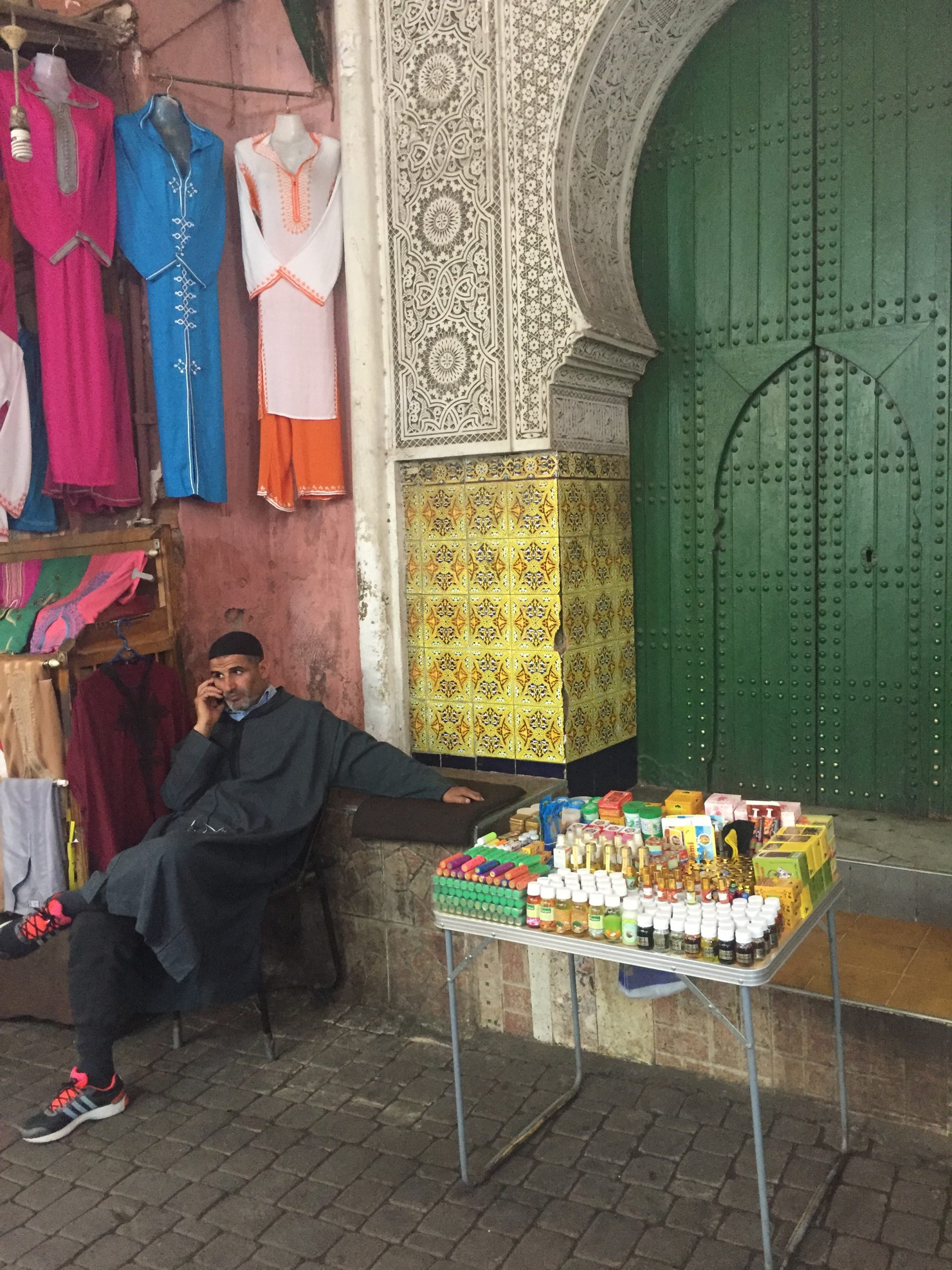
A souk is a traditional market within the medina. There is not one souk but dozens, each one specialising in a particular trade. There is a whole souk dedicated to lanterns, another to rugs, another to spices, another to leather goods, another to basket weaving. The souks are organised by craft in the same way they have been for hundreds of years and once you understand that, navigating them becomes much easier.
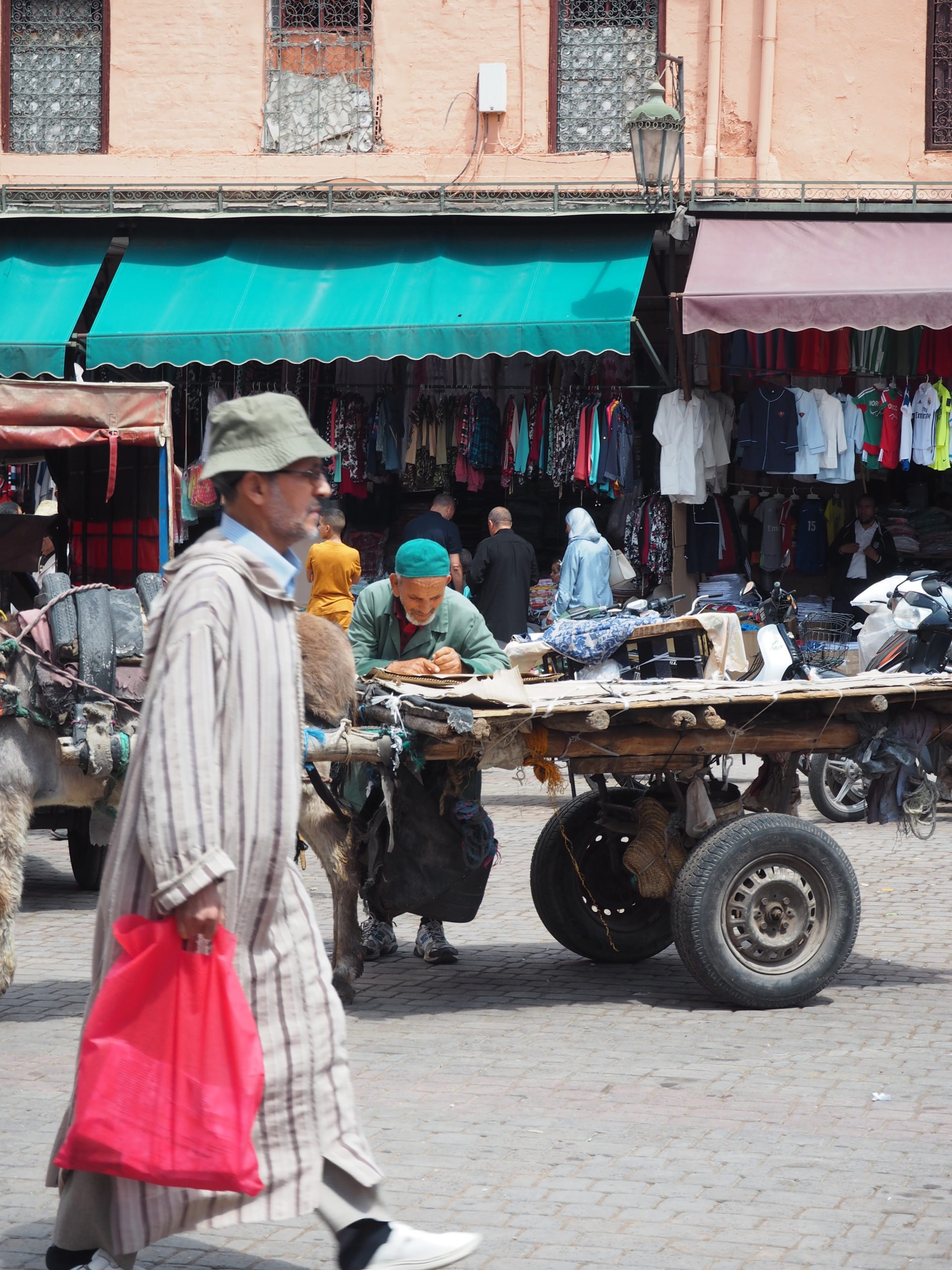
The single most important thing to know before you go shopping in Marrakech is this: there are no set prices. Nothing has a price tag. Everything is negotiable, and haggling is not just accepted, it is expected. It is part of the culture, part of the fun, and part of the whole experience of shopping here. Go in with that mindset and you will love it. I always have so much fun shopping in the medina.
WHAT DO YOU NEED TO KNOW BEFORE YOU GO SHOPPING IN MARRAKECH?
8 top shopping tips for morocco
These are my top Morocco shopping tips which you need to know before you go!
1. Decide what you want to buy before you leave home
Make a list. Write it in your phone. The souks are overwhelming and having a clear idea of what you are looking for will stop you getting distracted and spending all your money on things you did not intend to buy (although that will also happen).
2. Write down your measurements
This is especially important for rugs, cushions and anything that needs to fit a specific space. I always have room dimensions saved in my phone before I travel. There is nothing worse than falling in love with a rug and having no idea whether it will fit your living room.
3. Research UK prices before you go
For each thing on your shopping list, look up roughly what it would cost you at home. This gives you a realistic benchmark for haggling and stops you paying more than you should. If a rug would cost £300 in the UK, you know your top budget in Marrakech.
4. Research materials
Know the difference between wool and acrylic, real leather and faux, genuine argan oil and a blended version. The more you know going in, the better decisions you will make.
5. Take cash
Most shops in the medina do not take cards and even the ones that do will give you a better deal for cash. Get dirhams out at the airport or from an ATM in Gueliz before you head into the medina.
6. Take a spare suitcase folded inside your main one
I do this every single time. You will need it. Most shops will also wrap everything carefully so it travels safely. I have brought a lantern home in hand luggage before and it arrived in one piece. Shops will post things home too if you find something too big to carry, and in my experience they are genuinely great at it.
7. Save your favourite shop with a dropped Google Maps pin the moment you find it.
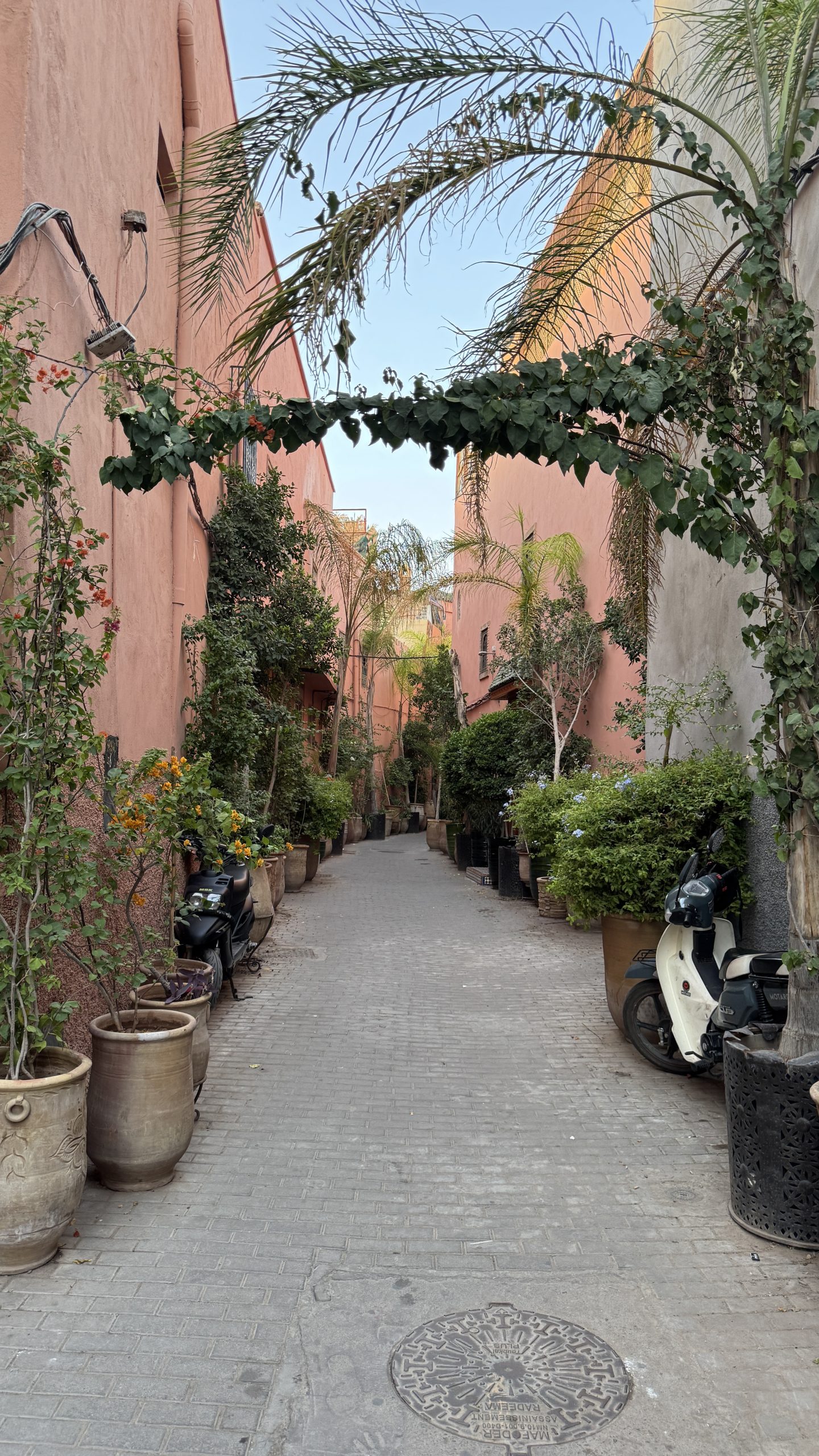
The medina is a genuine maze and you will not find it again from memory alone. Save everything with a Google Maps pin. Google Maps is not fully reliable inside the medina but dropping a pin the moment you find somewhere you love is how you find it again. This is genuinely the only way I have managed to return to my favourite shops over years of visits.This is how I have managed to find my favourite handbag shop for the past ten years.
8. Smile and be friendly to grab a bargain
Everyone will give you their card. Take it and be polite. You may never use it but the gesture matters and costs you nothing.
HOW DO YOU HAGGLE IN A MARRAKECH SOUK?
My Step-by-Step Guide to haGgling in the medina
Haggling is part of the culture and honestly one of the most enjoyable parts of shopping in Marrakech once you get into it. Here is how I approach it step by step.
Step 1. Before you even start talking price, have a number in your head. Know what you want to pay. Think about what feels fair for a handmade item and what you would pay for something similar back home.
Step 2. Show genuine interest in the item. Pick it up, look at it properly, ask questions about it. Sellers respond much better to people who genuinely appreciate the craftsmanship.
Step 3. When they give you a price, do not accept it. It will always be higher than what they expect to actually receive. Respond with something around just over half of what you want to pay and work your way up from there.
Step 4. Always haggle with a smile. This is crucial. It is a conversation, not a confrontation. Be warm, be friendly, laugh. I always say “can I have a local price?” with a big smile and it works brilliantly. I also occasionally mention that my husband would not be happy with me paying that much, even though I do not have a husband, which always gets a laugh and somehow always helps.
Step 5. If you have a friend with you, use the bad cop technique. Your friend shakes their head and says “no that is way too much” which gives you a third party to back up your position. It takes the pressure off you and often moves things along quickly.
Step 6. If the price is not moving to where you need it, walk away. Start heading for the door. Nine times out of ten someone will run after you with a better offer. That is the real price.
Step 7. Do not go too cheap. These items are handmade by skilled craftspeople who take real pride in their work. There is a fair price and going far below it does not feel good. If you have done your research you will know what is reasonable.
Step 8. Do not feel pressured to buy. Many shop owners will invite you in for tea, sit you down and show you everything. This is genuine Moroccan hospitality and it is lovely, but it is also a selling technique. You are absolutely allowed to enjoy the tea, admire the craftsmanship and walk away without buying a thing.
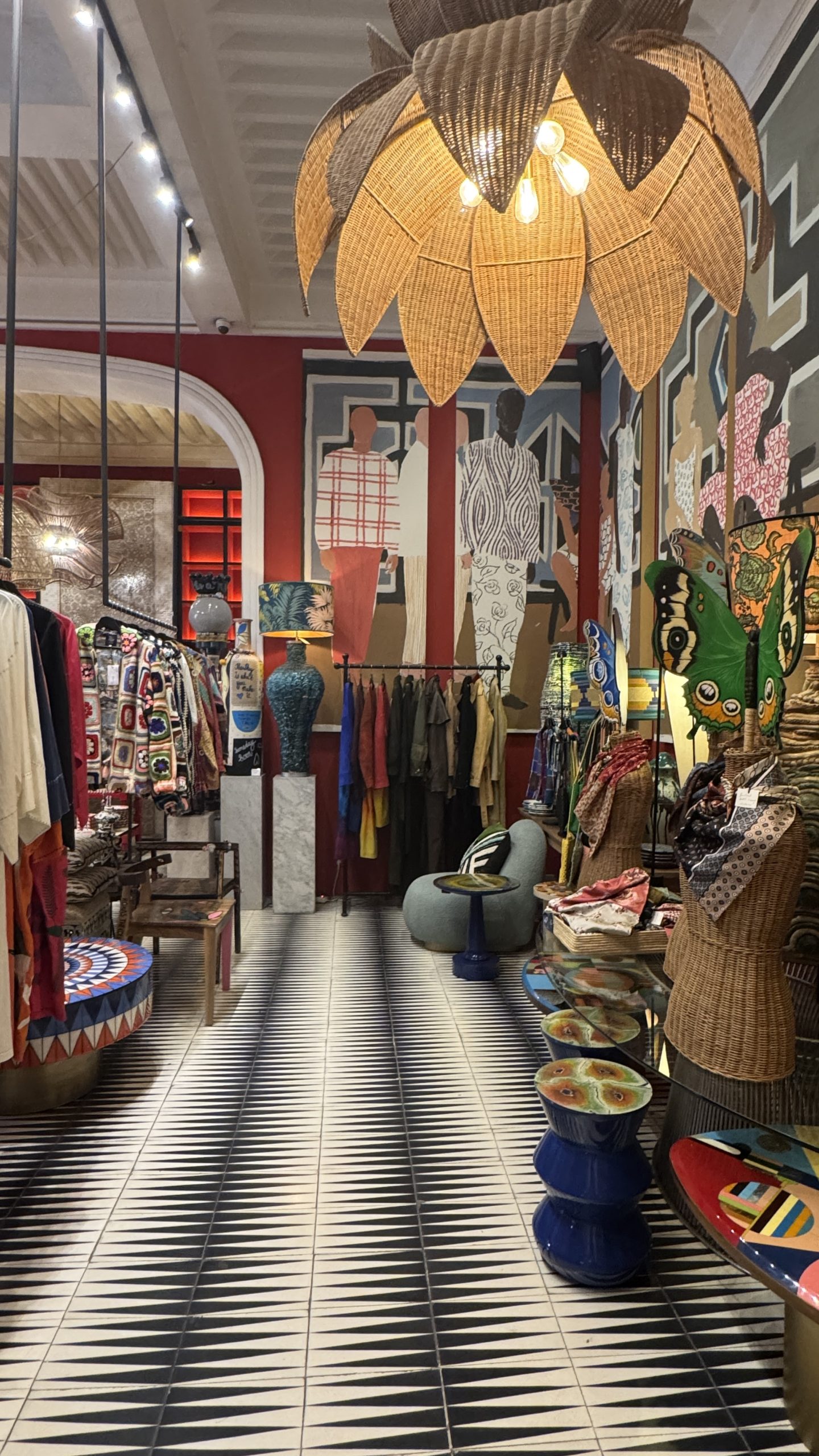
WHAT ARE THE BEST THINGS TO BUY IN MARRAKECH?
MOROCCAN RUGS
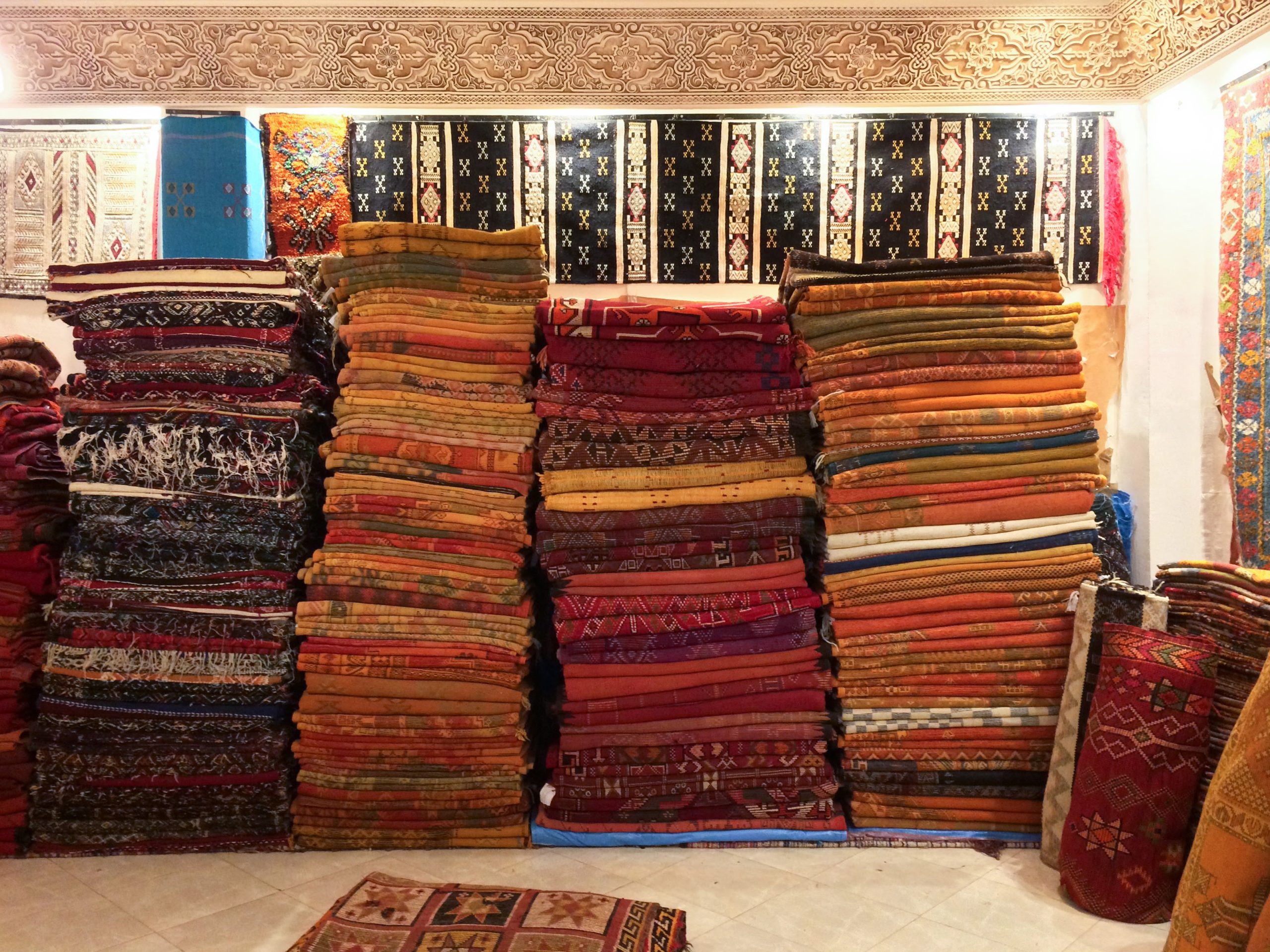
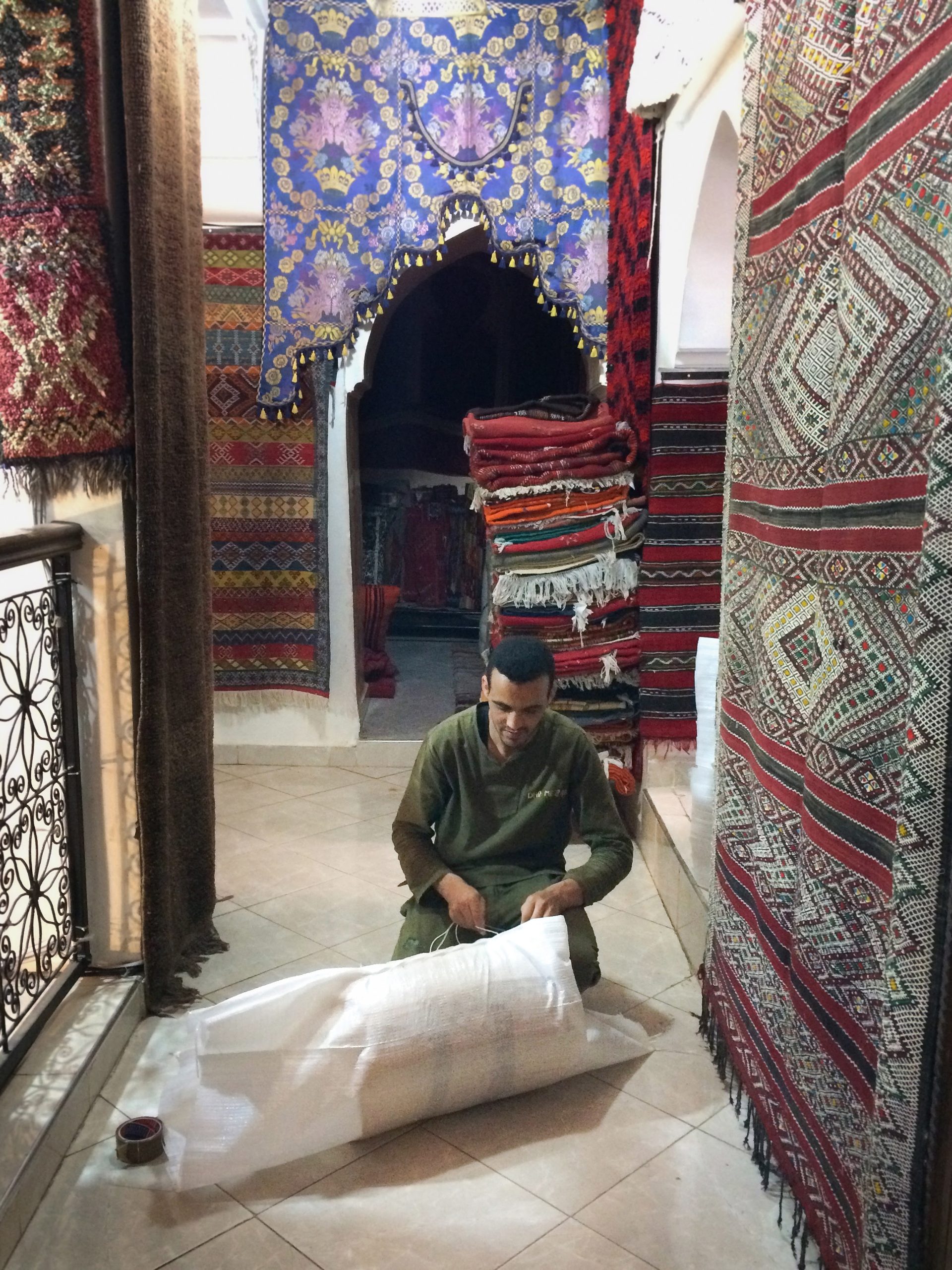
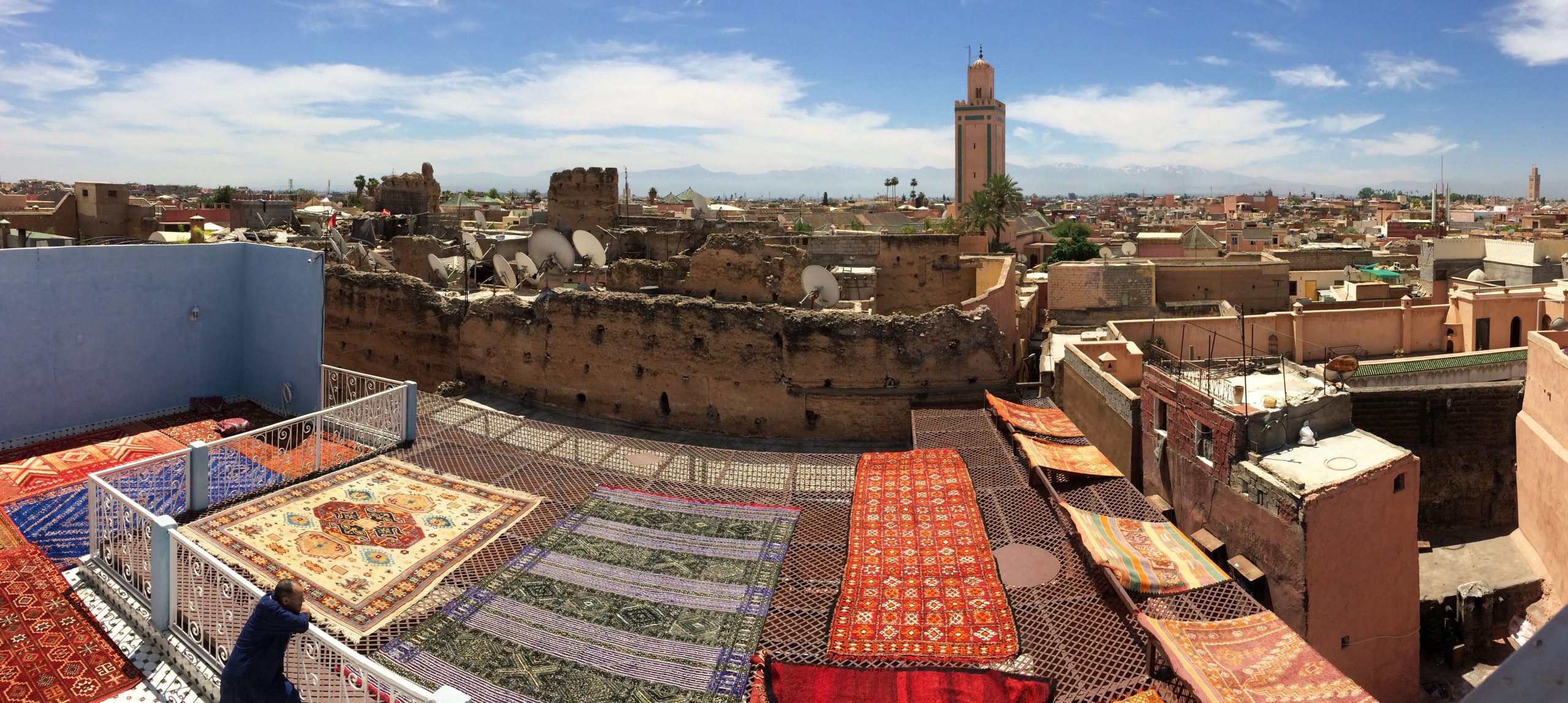
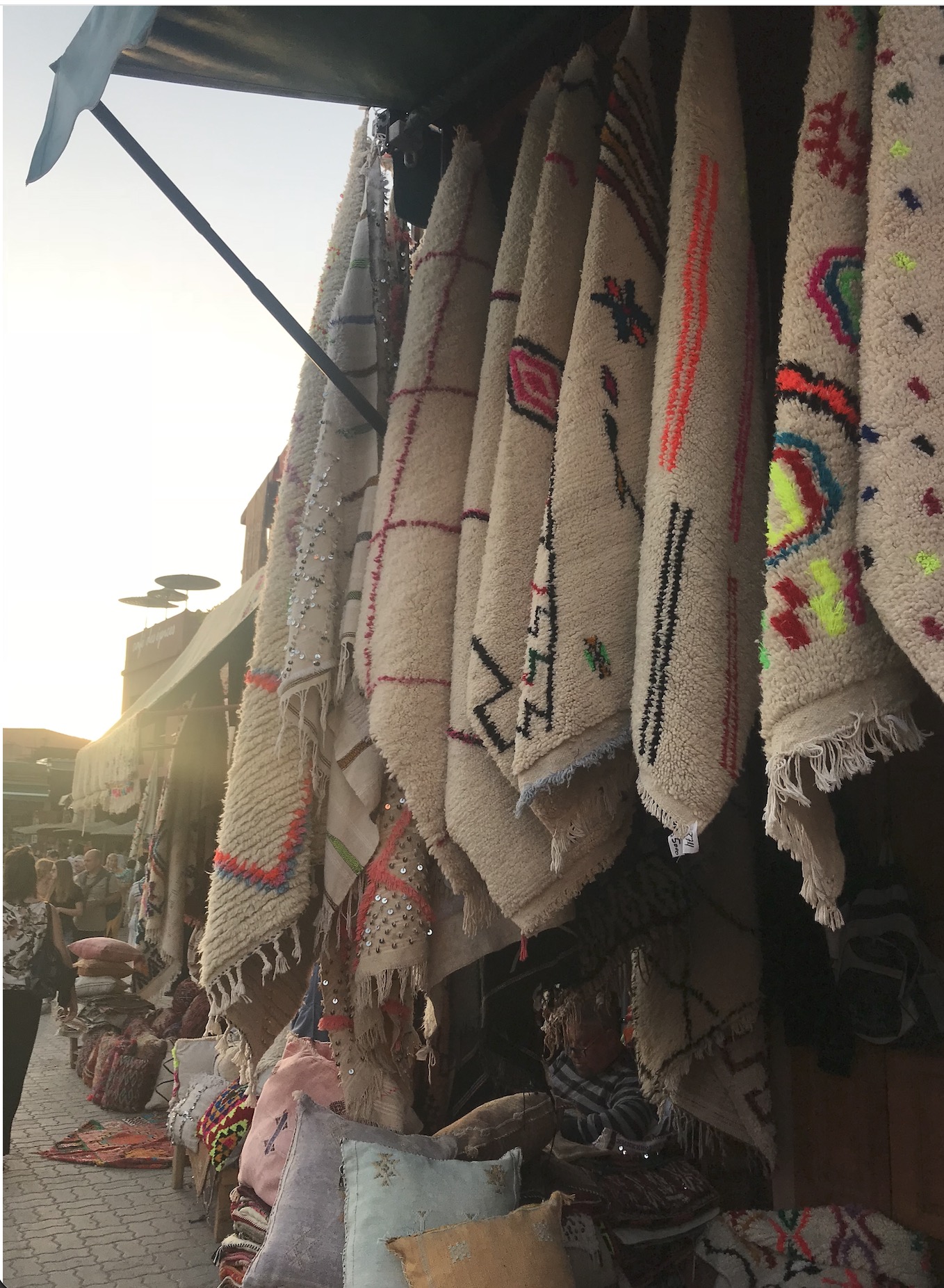
Rugs are one of the very best things you can buy in Marrakech and the rug souk near the old slave square is extraordinary. Berber rugs, Beni Ourain in black and white, flat-weave kilims, vintage pieces in faded terracottas and burnt oranges. You could spend an entire day in there. Have your room measurements with you and know whether you want wool or cotton before you go.
Rough prices (2026): A small Berber rug from around £40 to £80. A larger vintage piece from £80 to £200 depending on quality and age. You do need to pay for quality here. A beautiful hand-knotted wool rug takes months to make and is worth every penny.
How to style it at home: The obvious answer is the floor, but think beyond that. A rug draped over the end of a bed is one of my favourite styling tricks. Hung on a wall it becomes a piece of art. Draped over a banister it transforms a staircase. Layered over another rug in a sitting room it creates the most beautiful bohemian warmth.
One thing worth mentioning: most rugs sold in Morocco pass through middlemen and the women who actually make them see almost none of the profit. I discovered a women-owned cooperative right next to Ait Ben Haddou where the makers keep the majority of what they earn. They do not have a website but you can email them directly at [email protected] and I really recommend it.
Worth following: @houseofstarseed for beautiful rug inspiration
MOROCCAN CERAMICS AND POTTERY
Hand-painted bowls, tagines, serving dishes, mugs, jugs and platters in the most beautiful colours. The quality varies enormously so look carefully, tap pieces to check for cracks and buy from makers rather than resellers where you can. Large salad plates and bowls are the best buys. Far more useful than a tagine which you will struggle to fit in your oven at home.
Rough prices (2026): Small bowls from around £3 to £6 each. Large salad plates from £12 to £18. Tumblers around £5 each. I have since seen the exact designs I bought in Anthropologie for three times the price.
How to style it at home: The most unexpected and brilliant place is the wall. A collection of Moroccan plates grouped together on a kitchen or dining room wall looks absolutely stunning and is one of the easiest ways to add colour and personality to a plain space. On a table they are beautiful for entertaining. Mix them with simpler pieces so the pattern has room to breathe.
Worth following: @lallamarrakech for beautifully curated Moroccan ceramics
MOROCCAN LANTERNS AND LIGHTING
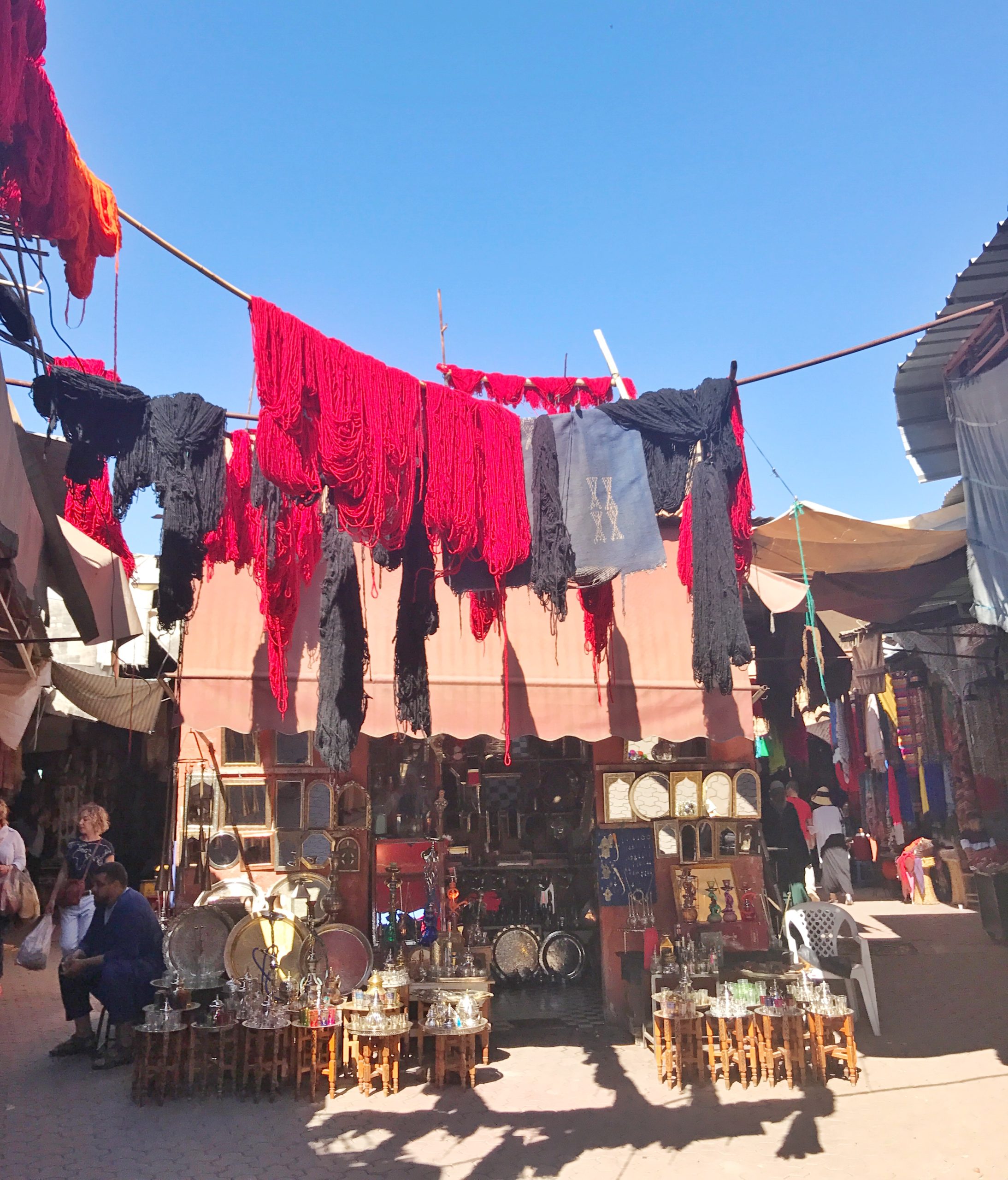
This is where I lose my mind completely. Brass lanterns, pierced metal pendants, coloured glass tea light holders, intricate wall sconces. The lighting in the souks is extraordinary and wildly affordable compared to what you would pay at home. There is a whole row of lantern shops and the sight of them all lit up in the afternoon sun is one of my favourite things in the medina.
Rough prices (2026): Small brass tea light holders from around £5. Medium lanterns from £15 to £30. Larger statement pendants from £30 upwards depending on size and complexity.
How to style it at home: In the garden on a summer evening a collection of brass lanterns with candles inside is genuinely magical. Hung in a cluster at different heights in a hallway or living room they cast the most beautiful dappled light. On a bathroom shelf or windowsill even a single small lantern adds instant atmosphere.
MOROCCAN CUSHIONS, TEXTILES AND TASSELS
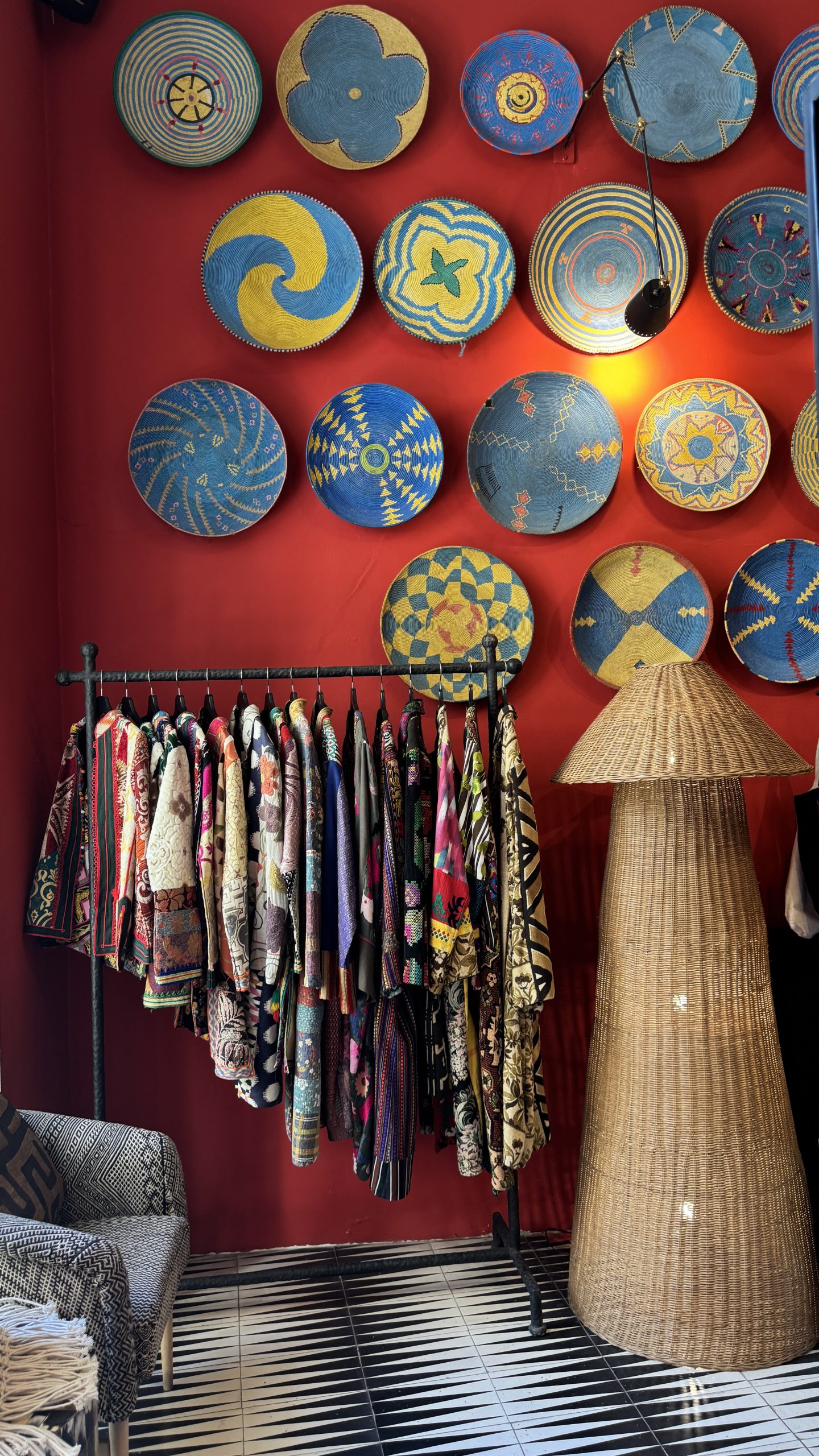
Embroidered cushion covers, hand-woven throws, Berber blankets, kilim cushions in every colour. The textile section of the medina is heaven. You can buy everything you need to transform a room for a fraction of what it would cost at home.
Rough prices (2026): Cushion covers from around £10 to £20 each. Throws and blankets from £25 to £60 depending on size and quality.
How to style it at home: Layer cushions on a sofa in groups of three or five as odd numbers always look better. Mix scales and textures. A Berber cushion next to a plain linen one next to an embroidered piece looks rich and considered rather than matchy. Throws work beautifully draped over the arm of a chair or folded at the end of a bed.
Do not forget tassels. I have Moroccan tassels on my door handles at home and they make me happy every single day. I have also made them into necklaces. They are incredibly versatile and cost almost nothing.
MOROCCAN BASKETS AND WOVEN GOODS
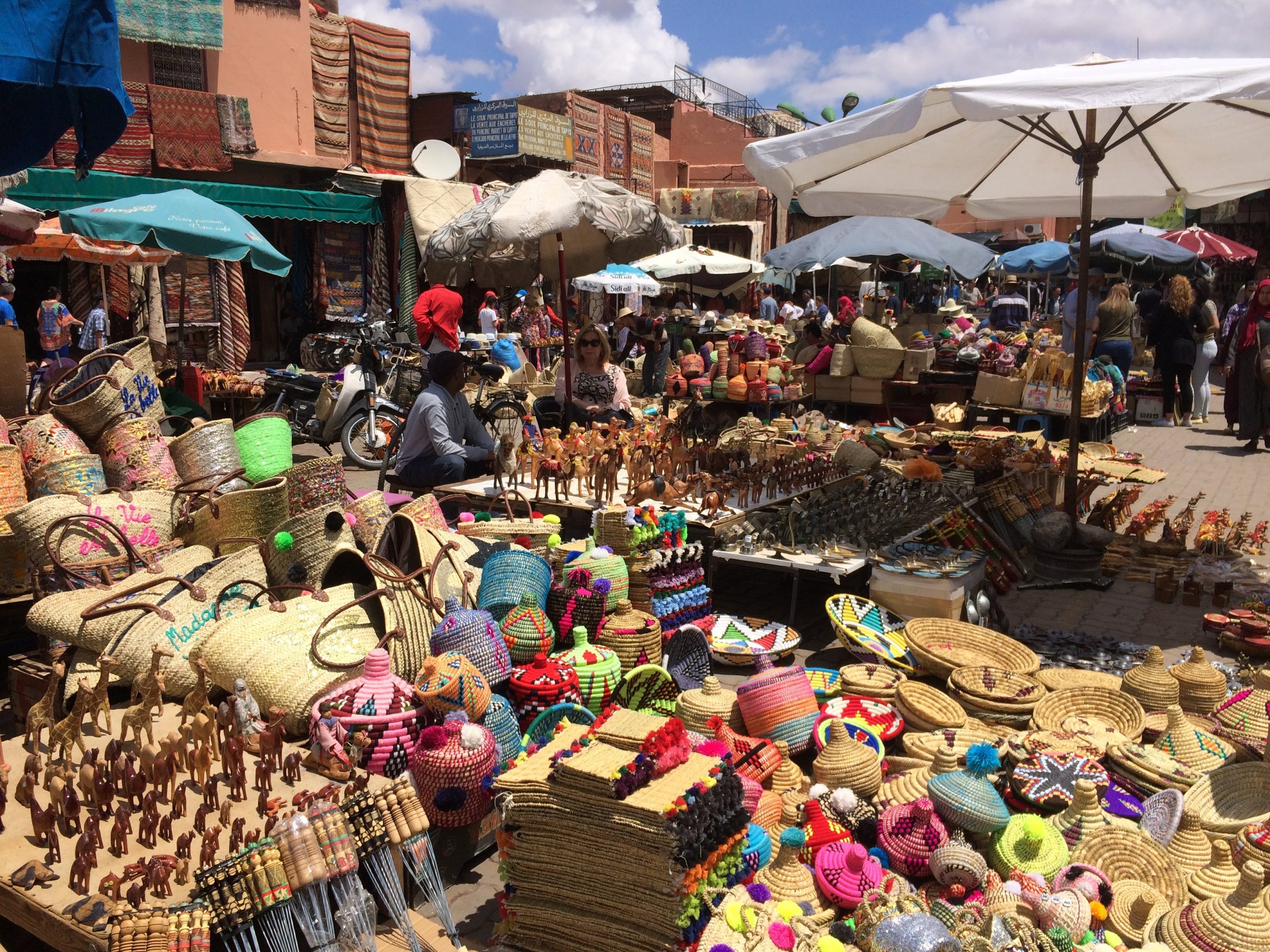
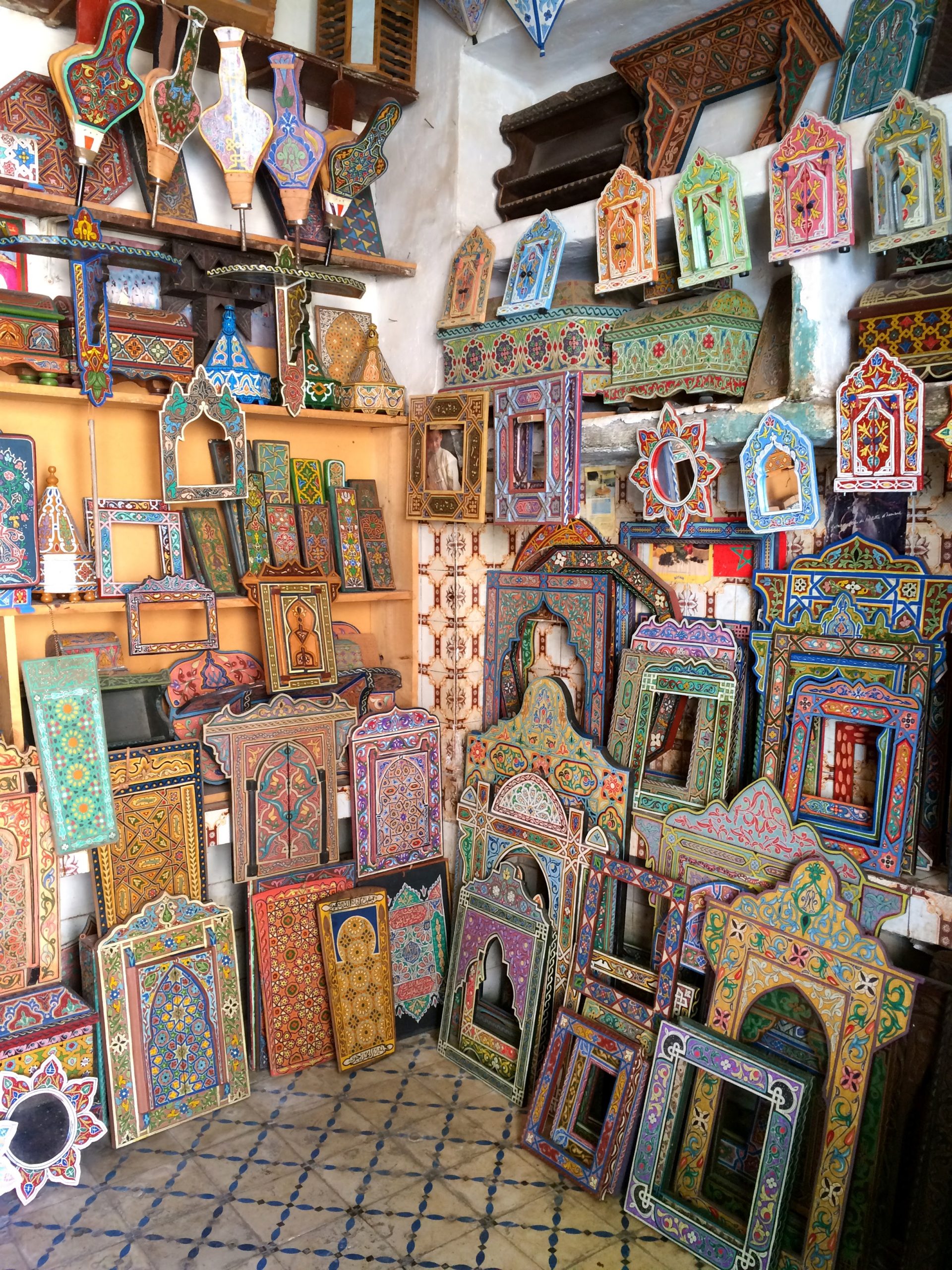
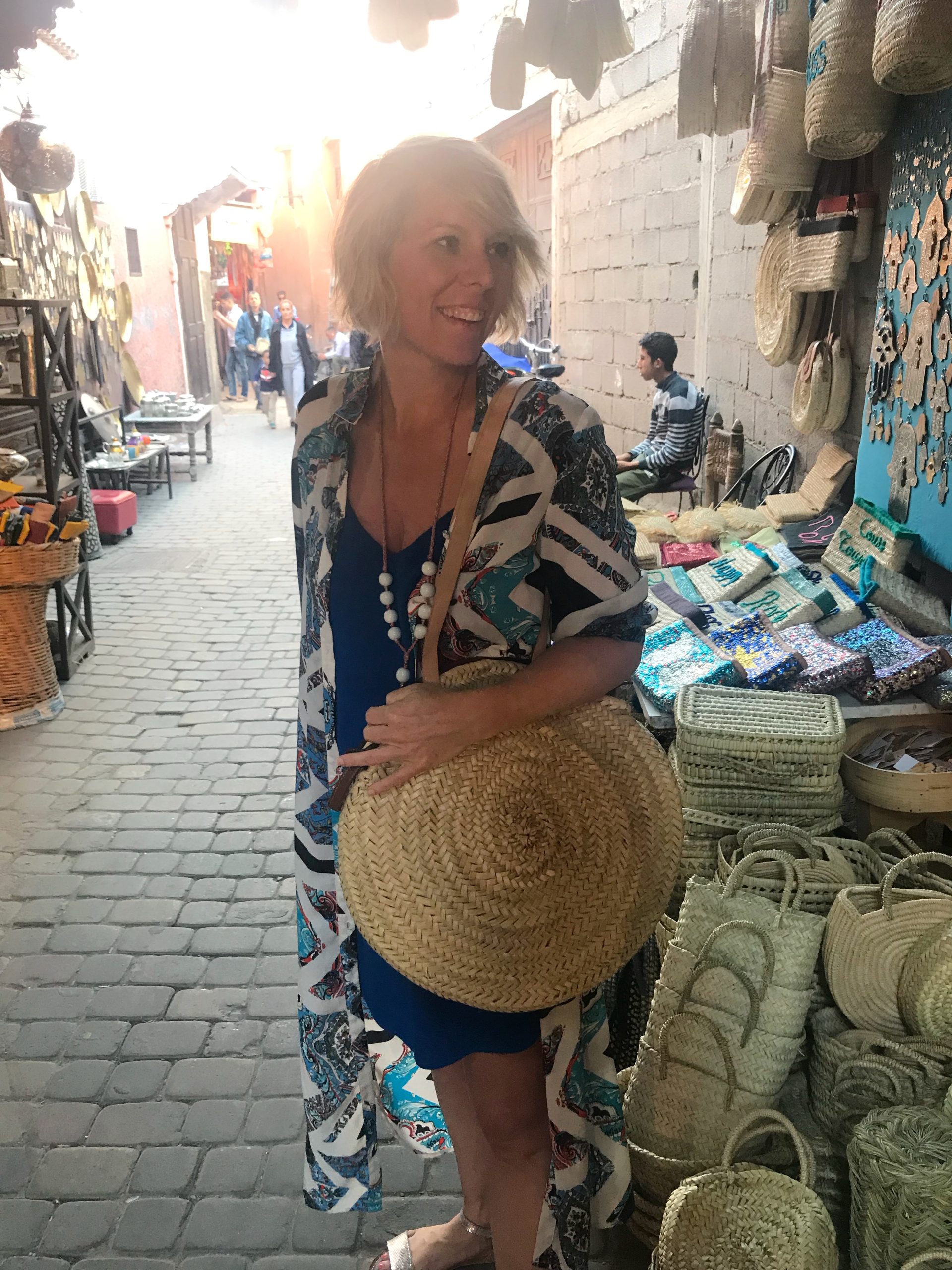
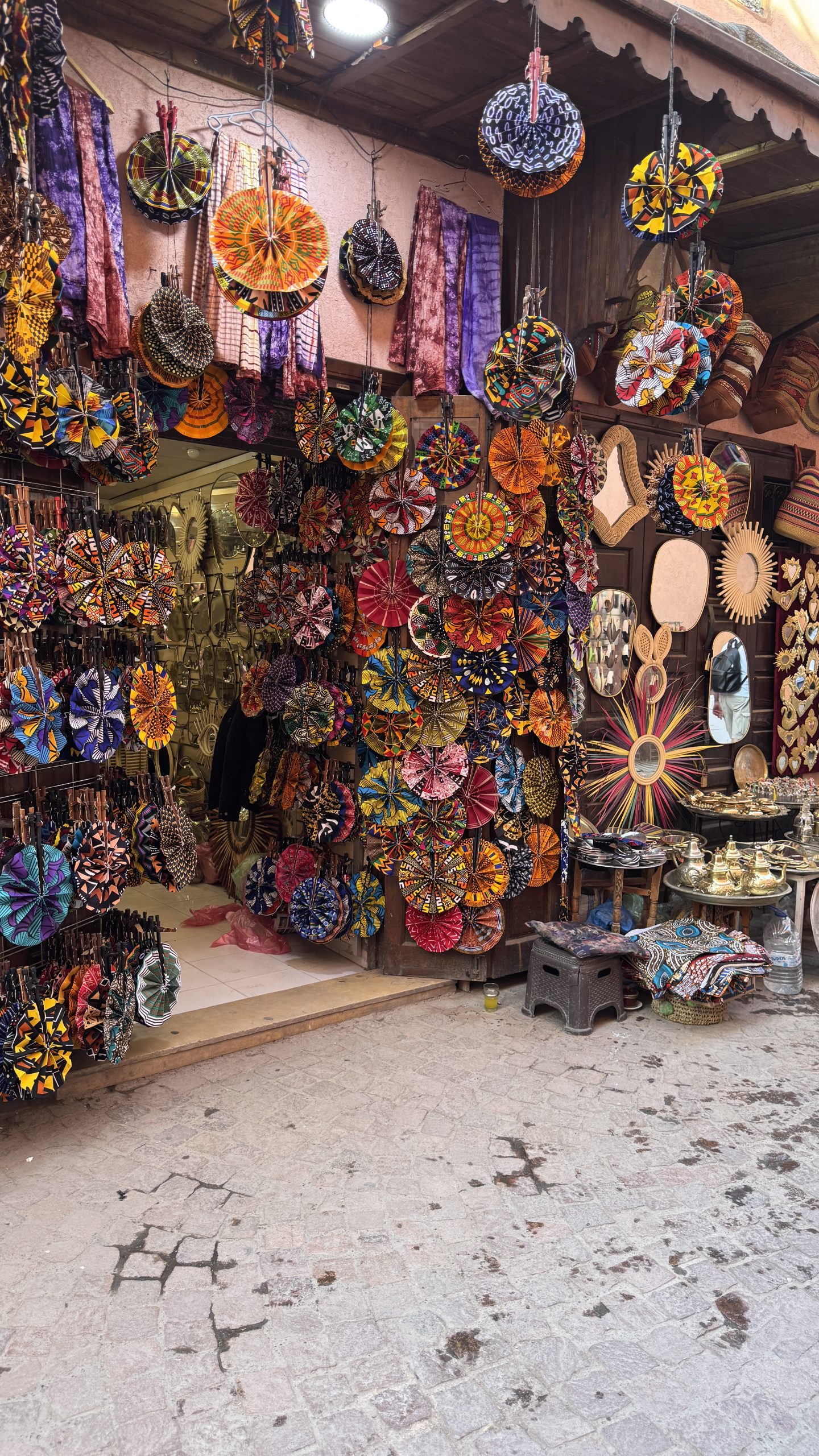
There is a whole area of the medina dedicated to basket weaving and the variety is stunning. Flat market baskets, tall storage baskets, woven trays and decorative pieces in natural straw, leather and fabric. These are brilliant for gifts and very easy to pack flat. Make sure you pick ones woven in rattan with real wool for the trim as a lot have acrylic wool which is not as nice to touch.
Rough prices (2026): Small flat baskets from around £8 to £15. Larger storage baskets from £15 to £30. The ladies who make them in the main square will also embroider sayings onto them for a small extra fee which makes them into the most beautiful personalised gifts.
How to style it at home: On the wall is my favourite way to use Moroccan baskets. A collection of different sizes grouped together makes a beautiful, textural wall display that works in almost any room. In the kitchen as fruit bowls. In a bathroom or bedroom for storage. They are one of the most versatile things you can buy.
MOROCCAN LEATHER GOODS, BAGS AND SLIPPERS
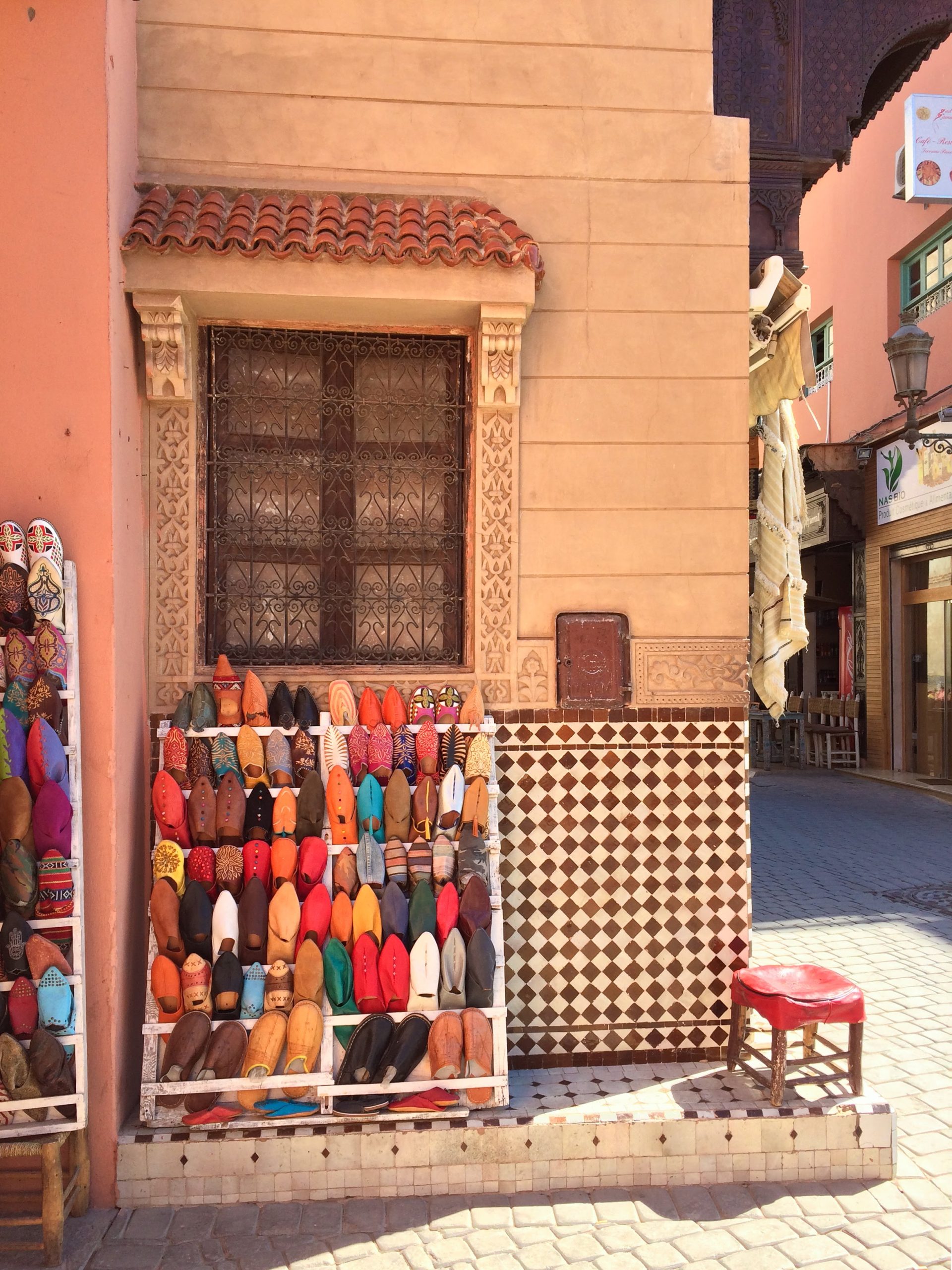
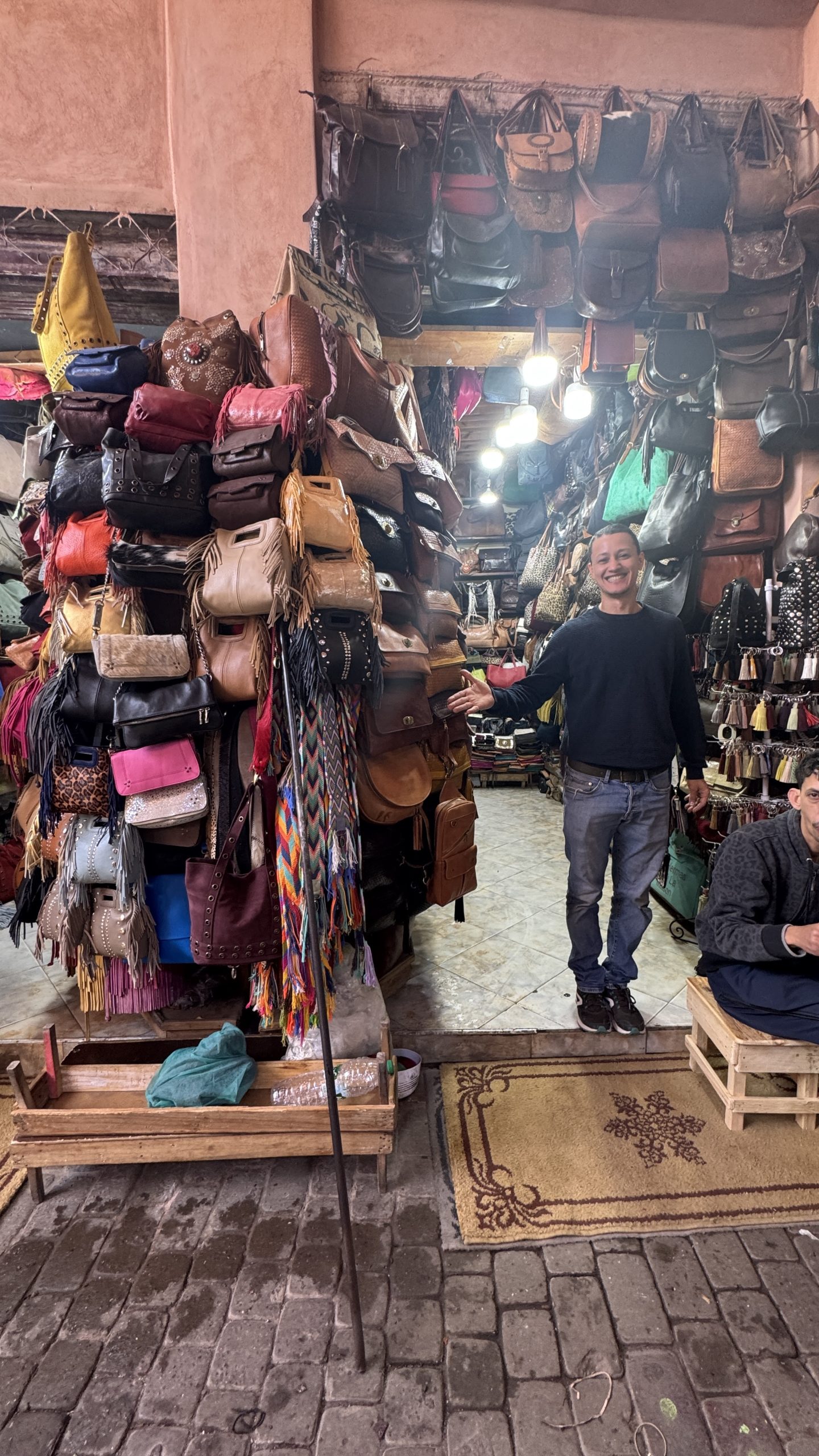
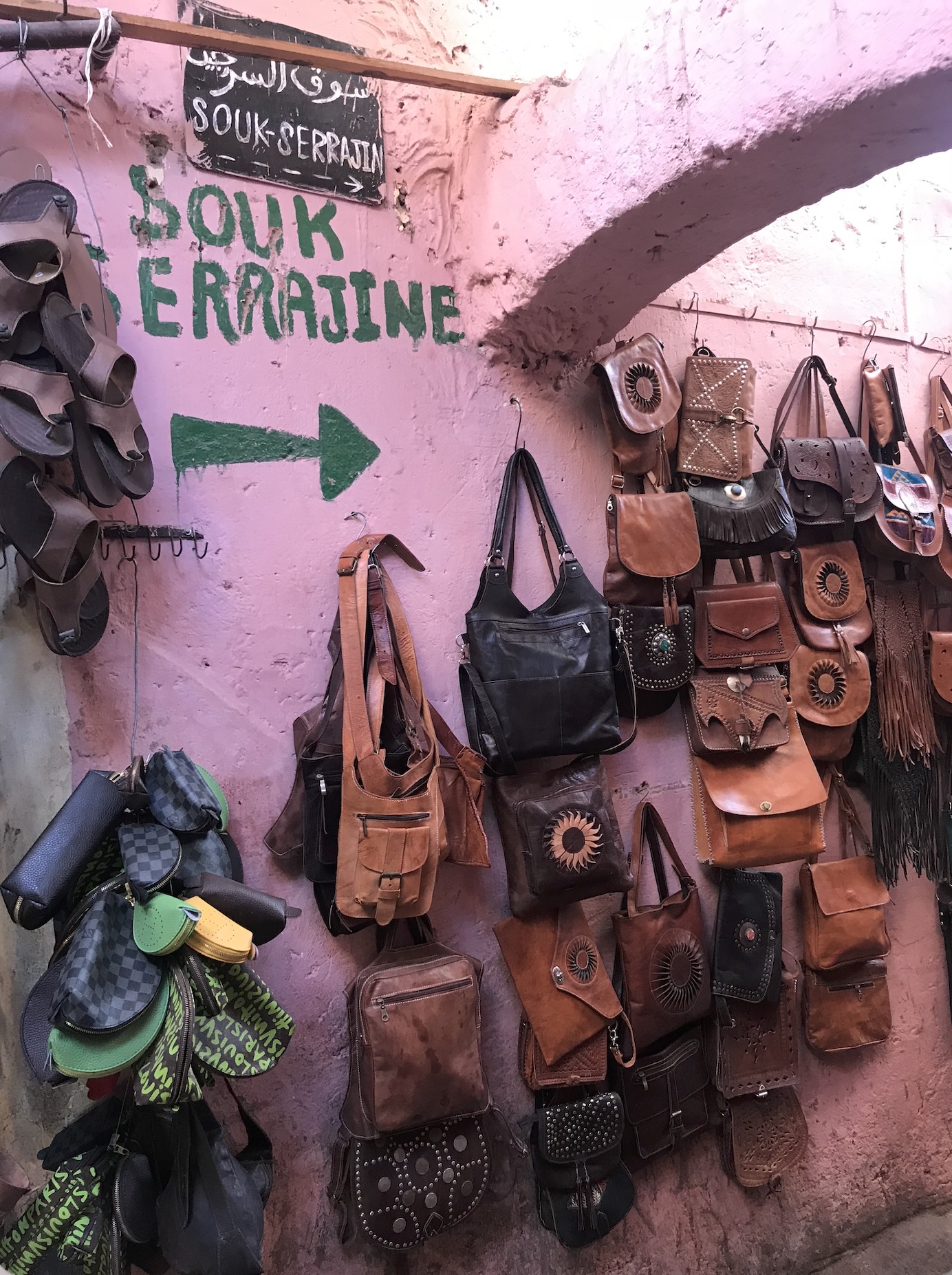
The leather work in Marrakech is famous for good reason. Babouche slippers in every colour are one of the best souvenirs you can bring home. Practical, beautiful and completely authentic. Bags range from simple totes to beautifully crafted structured pieces.
One important tip: always smell leather goods before you buy. Some can have quite a strong smell from the tanning process which does not always fade. If it smells very strong, leave it. Good quality leather should have a much more subtle scent.
Leather sandals made to measure while you wait are a Marrakech institution and well worth the time. Custom work like this usually takes about an hour and the results are brilliant.
Rough prices (2026): Babouche slippers from around £10 to £20 a pair. Bags from £20 to £80 depending on size and quality. Custom sandals from around £25 to £40.
How to style it at home: Babouche slippers displayed on a shelf or in a bathroom make a lovely decorative moment as well as being practical. I have a favourite handbag shop in the medina where they custom make bags for me and I have been going back for ten years. I save it with a dropped Google Maps pin every single time.
MOROCCAN JEWELLERY AND BEADS
Silver jewellery, Berber beads, amber, coral and resin pieces. My honest advice is only buy jewellery if you know what you are looking for because the quality varies wildly and it is easy to pay too much for something that is not what it appears to be. I always buy beads. Old Berber beads in amber, bone, coral and resin are genuine pieces of cultural history, they are beautiful, and you do not need to be an expert to spot something you love.
Rough prices (2026): Strings of Berber beads from around £15 to £50 depending on age and material. Silver pieces vary enormously so know your materials before you buy.
How to style it at home: Hang strings of beads from a hook, a curtain pole or a door handle for instant bohemian atmosphere. Drape them over a lamp base or a mirror frame. They are incredibly versatile decorative objects as well as jewellery.
MOROCCAN SPICES, OILS AND FOOD
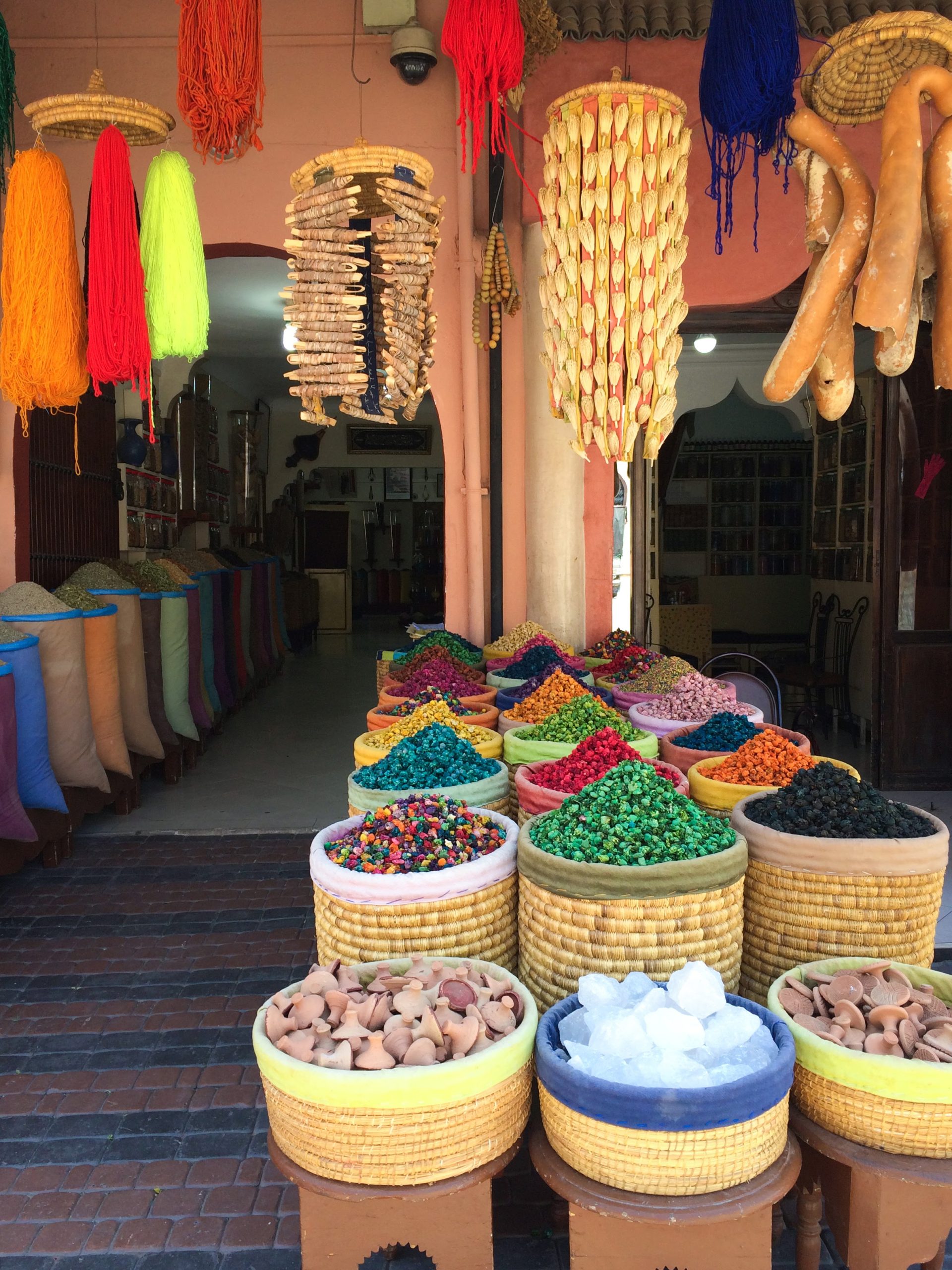
The spice souks are a sensory experience unlike anything else and everything in them makes a brilliant gift. Ras el hanout spice blends, dried rose petals, orange blossom water, saffron from Taliouine. Bring home as much as your suitcase allows.
Argan oil is one of Morocco’s most famous exports and genuinely worth buying here. Make sure you check that it is pure argan oil rather than a blended version. Ask before you buy and smell it. Real argan oil has a distinctive nutty scent. Oil burners are also beautiful buys from the medina. A brass or ceramic oil burner with a bottle of rose or argan oil makes a wonderful gift and looks beautiful at home.
Do not forget the food. Moroccan tea, proper loose leaf mint tea, is one of my favourite things to bring home. Dates, honey (look for the orange tins with a bee on them), dried apricots and almonds from the food souks are also brilliant and pack easily.
Rough prices (2026): Spice blends from around £3 to £8. Good argan oil from £10 to £20. Moroccan tea from around £5 to £10 for a good quantity.
How to style it at home: Display your spices in glass jars on a kitchen shelf. Arrange your oils around a beautiful ceramic tray. A brass oil burner on a bathroom shelf or bedside table with Moroccan rose oil is one of the simplest and most beautiful things you can do to make a room smell extraordinary.
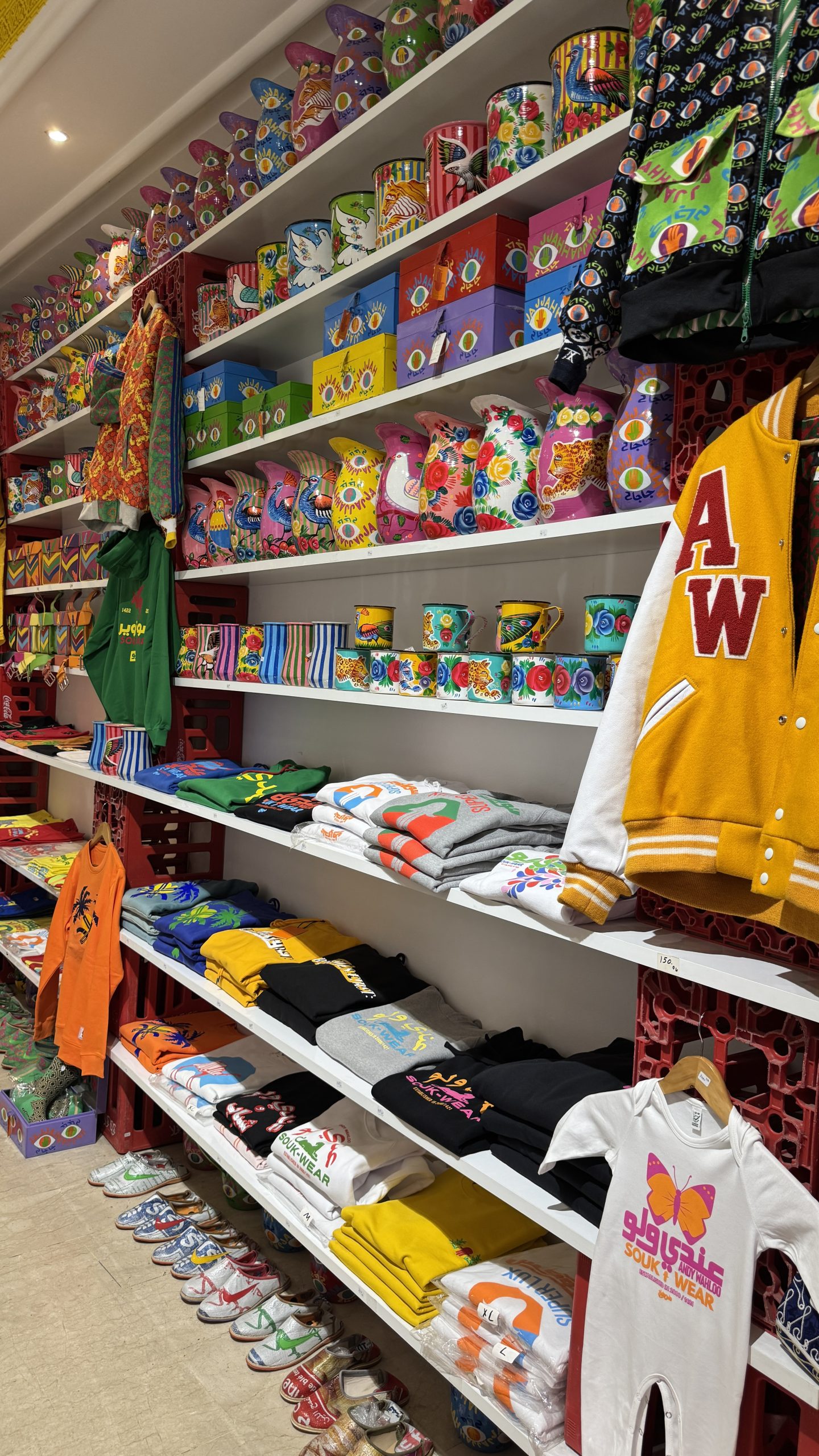
Worth following: @jajjah.tea for beautiful Moroccan teas, herbs and botanicals
HOW DO YOU NAVIGATE THE SOUKS IN MARRAKECH? 9 ways to shop like a pro
1. Do one full walk around before you buy anything.
Soak it all in, notice what catches your eye and get your bearings. Resist the urge to buy the first thing you fall in love with until you have had a proper look around.
2. Understand that the souks are organised by trade
There is a whole street of lantern shops, a rug souk, a basket weaving area, a perfume quarter, a jewellery section. Once you know this you can navigate with much more purpose.
3. Go deeper into the medina
The closer you are to the main square and the obvious tourist areas, the higher the prices and the more variable the quality. The further in you go, the more interesting and affordable things become.
4. Buy it when you see it
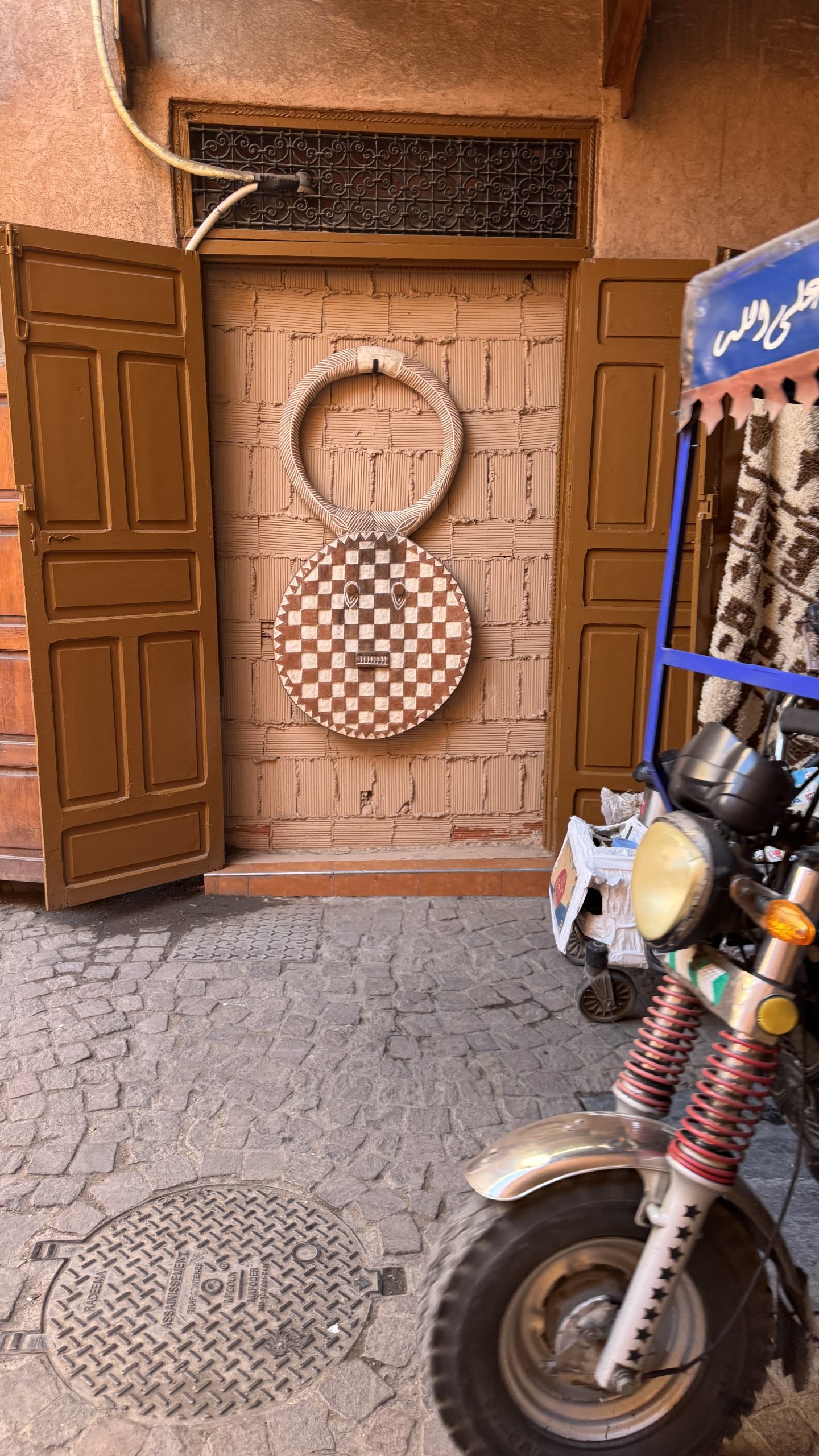
The medina is a genuine maze and if you walk away thinking you will come back, there is a very real chance you will never find it again. If you love it and the price is right, buy it. I have learned this the hard way more times than I can count.
5. Show a shop owner a photo of what you are looking for
If a shop does not have what you want, show them a picture on your phone. They will either find it for you, point you in the right direction or send you to someone who has it. This works brilliantly.
6. Take regular breaks
The medina is intensely sensory and overload is real. There are beautiful cafe terraces all over the place. Go up a staircase, have a mint tea, look out over the rooftops and collect yourself. The shopping experience is part of the culture and it should feel like an adventure rather than a chore.
7. Around the main square, expect the tourist stuff
The area immediately around Jemaa el-Fna is where you will find replica designer goods, higher prices and more persistent sellers. If you are carrying lots of shopping bags you will get a lot of attention. It is all part of the experience, just go in with your eyes open.
8. Fixed price shops exist and are worth knowing about
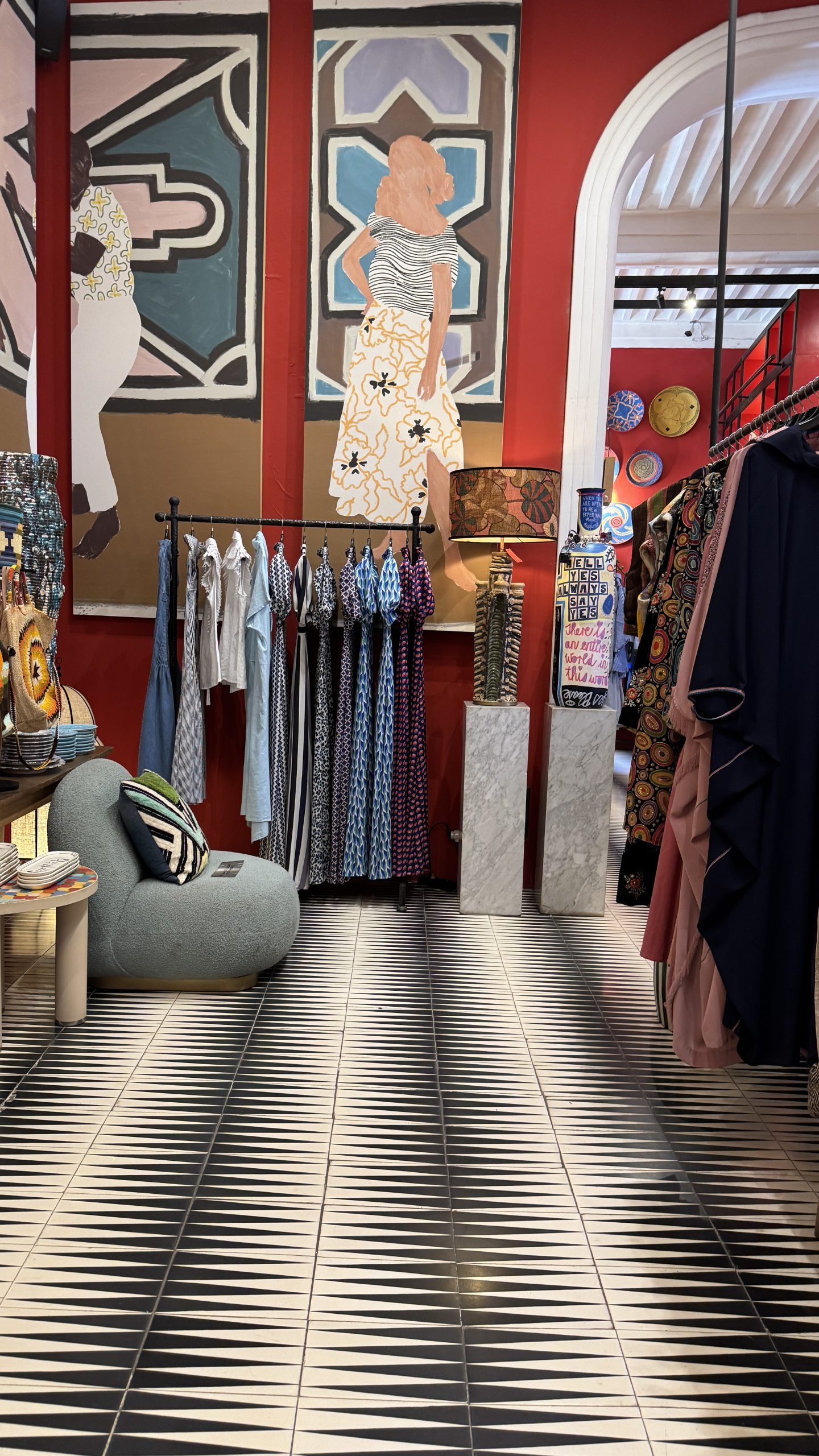
If haggling genuinely stresses you out there are shops in Marrakech where the price is what it says. They tend to be slightly more expensive but the quality is often very good and the experience is much more relaxed. Worth it if you are short on time or energy.
9. Remember this stuff is going to your home
Buy things you genuinely love and that you can see a specific place for. A beautiful Moroccan lantern or a handmade rug will give you joy every single day. That is worth paying fairly for.
INSTAGRAM ACCOUNTS WORTH FOLLOWING BEFORE YOU GO to Marrakech
@houseofstarseed for beautiful rug inspiration and sourcing
@lallamarrakech for stunning ceramics and homewares
@jajjah.tea for Moroccan teas, herbs and botanicals
@riadlovers for beautiful riad interiors and inspiration
@bemarrakech for the best visual guide to the city
What to Buy in Marrakech: An Interior Stylist’s Ultimate Shopping Guide new for 2026
I will keep adding to this post as I discover more. If you have a brilliant find or a shop you think I should know about, drop it in the comments below.
love Maxine x
More about Maxine
I’m an interior stylist, creative director and interiors journalist based in Brighton, working across London, Sussex and the wider UK. With 25 years of experience across magazines, brands, TV and private homes, I specialise in creating spaces that feel joyful, considered and full of personality. Find details of my services at maxinebrady.com/interior-styling-services and follow me on Instagram at @maxinebradystyling for daily inspiration. You can also listen to the How to Home Podcast wherever you get your podcasts.
If you have enjoyed this post, please follow me on Instagram @maxinebradystyling and on Pinterest for more styling ideas, real-life renovations and practical design advice.
Check out these posts!
Where to Stay in Marrakech: The Ultimate Guide From an Interior Stylist
8 Moroccan Decorating Ideas To Start Your Day
How To Choose The Right Rug Size: 5 Expert Tips You Can’t Afford To Miss