If your home has a room that is always freezing in winter and unbearable in summer, a ductless mini split might be the most useful thing you read about this year. I know that sounds like a bold claim but stay with me, because once you understand how these systems work and what they can do for an older home, a small flat, or a room your central heating just never quite reaches, you will wonder why everyone is not already talking about them.
I came across ductless mini splits while researching energy efficiency options for my Brighton cottage renovation and honestly I was surprised I had not heard more about them before. They are incredibly popular in the US and across parts of Europe, and they are growing fast in the UK too, and for very good reason. Here is everything you need to know.
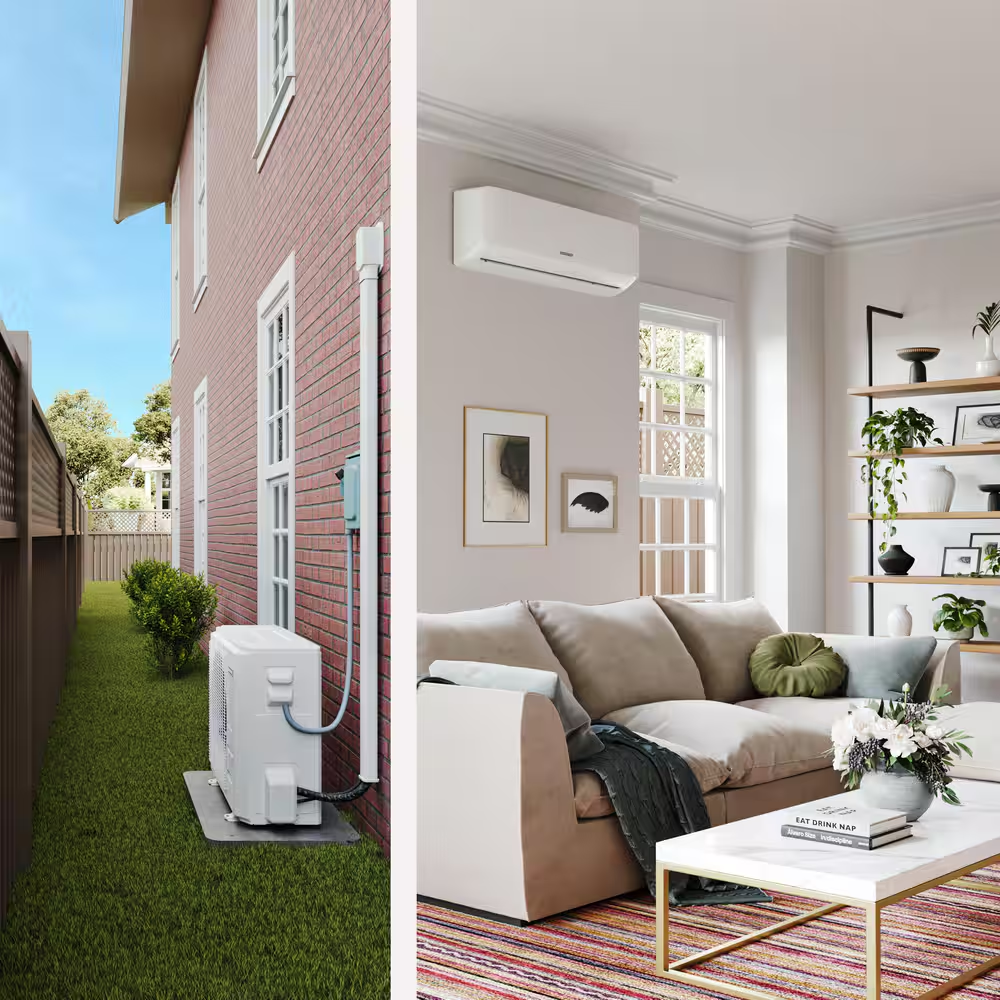
So what actually is a ductless mini split?
A ductless mini split is a heating and cooling system that works without any ductwork at all. Instead of pushing air through a network of ducts hidden in your walls and ceilings, it connects a small outdoor compressor unit directly to one or more indoor wall-mounted units via a refrigerant line. That line only requires a small hole in your wall to install with no major building work, no tearing up your home, no weeks of disruption.
The indoor unit sits quietly on your wall and heats or cools the room directly. Many systems also dehumidify as they go, which is a genuinely underrated feature for UK homes where damp is such a persistent problem.
Most modern mini splits use inverter technology, which means instead of switching on and off at full power the way traditional systems do, they run continuously at a lower adjusted speed. This keeps the temperature in your room more consistent and uses significantly less energy overall.
Do ductless mini splits heat and cool?
Yes! And this is one of the things people are most surprised to learn. Most modern ductless mini split systems work as both a heater and an air conditioner, meaning one system handles your summer cooling and your winter heating. Many also dehumidify, which in a UK home, particularly an older or smaller one like mine, is genuinely useful all year round.
This multi-functionality is one of the biggest reasons they represent such good value. You are not buying a separate air conditioning unit for summer and a separate heater for winter. One system, one installation, one set of running costs.
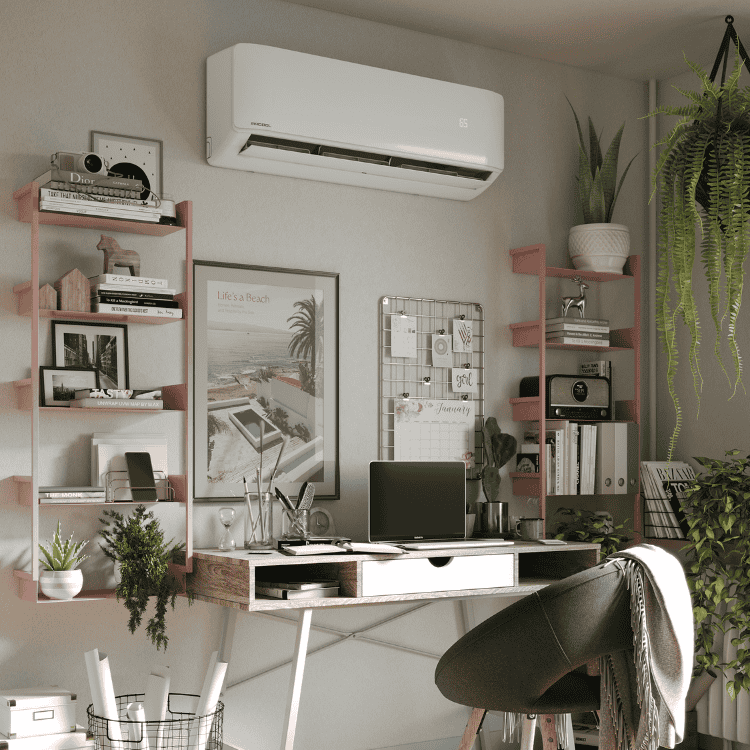
Ductless mini split installation: what to expect
Because the only structural work required is a small hole for the refrigerant line, installation is genuinely much less disruptive than you might expect. For older homes, period properties or flats where running new ductwork would be either impossible or prohibitively expensive, this makes mini splits a really practical option.
A typical single-zone installation takes a qualified engineer one day to complete. The outdoor unit is mounted on an external wall or on the ground outside your home, the indoor unit is fixed to an interior wall, and the two are connected via the refrigerant line through that small hole. Your engineer will also handle any electrical connections needed.
One thing worth knowing is that placement matters more than people realise. Cold air drops and creates what engineers call a thermal plume effect which is essentially a waterfall of cool air across the floor before it rises and circulates. A good installer will factor this into where they position your indoor unit so you get the most even, comfortable temperature throughout the room.
Always get at least two or three quotes from qualified installers and ask them to carry out a proper load calculation based on your room size rather than just estimating from square footage and it makes a real difference to whether the system is correctly sized and performs well long term.
How much does a ductless mini split cost to install?
Costs vary depending on the brand, the number of zones you need and your property, but here is a realistic guide.
In the UK, a single-zone system (one outdoor compressor connected to one indoor unit) typically costs between £1,500 and £3,500 fully installed. This covers the equipment, refrigerant line, any electrical work and the labour. A multi-zone system, where one outdoor unit connects to two or more indoor units in different rooms, ranges from around £3,500 to £8,000 depending on how many zones you are adding. Each additional zone typically adds around £800 to £1,500 for the indoor unit and installation.
Back in the UK, running costs for a single zone are typically around £20 to £50 per month during heavy use periods, which compares very favourably to running electric heaters or portable air conditioning units.
Premium brands like Mitsubishi and Daikin sit at the higher end of the price range but offer better efficiency ratings, quieter operation and longer warranties. Look for a high SEER2 rating when comparing systems you’ll find that the higher the number, the lower your running costs will be over time.
The advantages of ductless mini split systems
This is the part that really surprised me when I first started looking into these. Traditional ducted heating and cooling systems can lose over 30% of their energy through the ductwork itself, especially in older homes where ducts run through cold loft spaces or poorly insulated walls. You are essentially paying to heat your building fabric rather than the room you are actually sitting in.
Ductless mini splits eliminate that loss entirely. The refrigerant travels directly from the outdoor unit to the indoor unit, delivering conditioned air exactly where you need it with almost no waste. Studies suggest this can reduce energy consumption by up to 30% or more compared to conventional systems, and when you factor in how much energy bills have risen over the last few years, that saving quickly adds up.
Beyond efficiency, the advantages are genuinely impressive. With a multi-zone system, each room has its own indoor unit and its own temperature setting, so you can have the bedroom cool at night while keeping the living room warm without heating the whole house. For a small home like mine, being able to control exactly where the heat goes is brilliant. The indoor units are also remarkably quiet which is good to know if you have ever tried to sleep next to a noisy portable air conditioning unit you will appreciate that more than most. And many systems include built-in air filters that capture dust, allergens and particles as they run, which for anyone with a pet (hello Teddy) is a real added bonus.

11 reasons why your home one a ductless mini split systems this summer
- Reduces energy loss by up to 30% or more compared to traditional ducted systems
- No ductwork needed — only a small hole in the wall required for installation
- Heats, cools and dehumidifies all in one system
- Individual room temperature control with multi-zone systems
- Inverter technology runs continuously at low speed rather than cycling on and off, saving energy and maintaining a more even temperature
- Remarkably quiet indoor units
- Built-in air filtration captures dust, allergens and pet hair
- Works in older homes, flats and period properties where traditional ductwork is not possible
- Can be installed in a single day with minimal disruption
- Lower monthly running costs compared to electric heaters or portable air conditioning units
- Ideal for garage conversions, loft rooms, extensions and any space your current heating does not reach properly
About Maxine Brady
Maxine Brady is an award-winning interior stylist based in Brighton with 25 years of experience styling homes and interiors for magazines, brands and TV shows across London, the UK and internationally. Follow her on Instagram (96K followers) and TikTok. And if you love interiors, come and listen to her podcast — How to Home.